Short stories and essays by Shaun Costello, as well as excerpts from manuscripts in progress.

Latest

REVISIONIST HISTORIANS CAN BE HAZARDOUS TO HISTORY


REVISIONIST HISTORIANS CAN BE HAZARDOUS TO HISTORY


By Shaun Costello

Historians sometimes become so involved in the events they are chronicling, that they begin to feel they were participants in, rather than chroniclers of those events.

Historians sometimes become so involved in the events they are chronicling, that they begin to feel they were participants in, rather than chroniclers of those events.


Mr. Bowen will endlessly insist that his version of events is correct, regardless of challenges from people who actually experienced the era he's revising.

Mr. Bowen will endlessly insist that his version of events is correct, regardless of challenges from people who actually experienced the era he’s revising.

Revisionism is a dangerous commodity. I speak from experience, having had my life turned into fiction by numerous writers whose motives and sources were questionable at best. Those who call themselves historians are a dangerous breed, who often become so involved in chronicling an era that they begin to think they were actually part of it. Busy attempting to reassemble the characters and events of the Adult Film Industry in the 1960’s and 1970″s, I can think of two so-called historians who fit this category. One is Michael Bowen, and the other is Ashley Spicer. The former, who has some oblique connection to NYU, will endlessly insist that his version of history is correct, regardless of challenges from people who actually experienced the era he’s revising.


Ashley Spicer behaves like he's filed for patent rights on his revelations.

Ashley Spicer behaves like he’s filed for patent rights on his revelations.


The latter, who, in addition to his day job as an investment banker, operates, along with his wife April, a web site called The Rialto Report, which offers articles about, and interviews with adult film stars from the Sixties and Seventies, the decades that are often called porn’s “Golden Age’. Mr. Spicer seems to have filed for patent rights to the chronicle of these decades, suggesting his ownership of the whole story, and woe be unto those who dare to challenge the authenticity of his revelations. Like Evangelical Christians, who believe the Bible is the word of God and should be taken literally, Mr. Spicer seems to suggest that, not only should his version of history be taken as Verbum Dei, but that he owns the book and film rights as well.


Ashley and April Spicer would have you believe that, not only should their version of history be taken as Verbum Dei. but that they own the book and film rights as well.

Ashley and April Spicer would have you believe that, not only should their version of history be taken as Verbum Dei. but that they own the book and film rights as well.

 *

© 2014 Shaun Costello

Keep SHAUN COSTELLO’S BLOG up and running.
Creating and maintaining this BLOG is time
consuming. If you like what you’ve been reading,
please help me keep it going.
DONATE ANY AMOUNT Through PAYPAL at:

HUFFINGTON POST’S INFO GRAB CONTINUES


AriannaMark

LIKE TWO PEAS IN A POD

Like Bogart and Bacall. Like Gable and Lombard.

Like Madonna and the NBA.

Arianna and Mark – together at last. And the cash keeps flowing.

As a long time reader and commenter on Huffington Post, I was surprised when, in December of 2013, my comments were no longer welcome. Instead, I was told that I needed to sign back in to my Huffington Post account through Facebook. The reason given was that Huff Post needed to verify my identity. After several years as a commenter, Huff Post needed to know who I was. Of course the stench of this deceit was obvious to anyone with any sense at all. Huffington Post had gone into the information business – mine, yours, anyone’s.

By signing in to Huff Post through Facebook, all of the personal information stored in my Facebook account would now be available to Huff Post. Included in this information of course, would be all the personal information stored in the accounts of all those who are on my Facebook friends list. Your Facebook account, in terms of the personal information stored in it, is like a little Ponzi Scheme, with you at the top of the pyramid, and the rest of the structure built from the information about all those on your FB friends list. This pyramid of personal data is available to any opportunistic FB advertiser whose despicable but effective method includes: Click “Like” if you like kittens. Of course, naïve Facebook members who click “Like” are now going to be hounded by the advertiser, who, if they had looked closely enough, turns out to be a pet food and services company who now has, not only all the personal information in their FB account, but all the personal information from all the people on their FB friends list. This is why Mark Zuckerberg is a billionaire, folks. And why YOU are NOT.

OK, back to my battle with Huff Post. Feeling a sense of righteous indignation, I contacted Huffington Post to complain about my dilemma, and their preposterous info grab. I sent off two emails, one to the normal channels for reader complaint, and the other to Arianna Huffington directly. Arianna, to her credit, has responded in the past to my emails. Not this time – there was no response. After a week or so of Huff Post’s silence, I noticed an additional possibility to address my frustration. Listed among contact possibilities was DIRECTOR OF COMMUNITY. So I sent off an email to this personage, and got a response that very day.

His name was Tim McDonald, Huffington Post’s Director of Community. He seemed reasonable enough, even though he vehemently denied that Huff Post was collecting personal information through Facebook that it would later market in the great, world-wide, internet information bazaar. For the purpose of full disclosure dear reader, I am going to paste in here, my entire correspondence with Mr. McDonald – from my very first plea for reinstatement, to our dubious final agreement that Mr. McDonald himself would personally see to my identity verification without going through the farce of the Facebook revelation which, of course, he never really did. As I assemble this chronicle of complaint, it is Wednesday January 15th, and I still can not comment on Huffington Post. I am no longer a welcome participant in Huff Post’s public dialogue. No, I am cast out into the darkness, a leper without portfolio, because I dared to suggest that Huffington Post was selling information it collects through the naiveté of it’s readership. So here is my correspondence with Mr. McDonald. You, dear reader, should judge this farce for yourselves. You, members of Arianna Huffington’s wretched refuse, are a jury of peers. Read, and judge accordingly:   


Shaun Costello

Shaun Costello

December 16,2013

I am a long-time reader and commenter on Huffpost, but can no longer comment and refuse to give up the personal information of many people who have trusted me with it. You can no longer comment on an article on Huffpost unless you verify your ID through Facebook, which automatically releases all the personal information stored in your Facebook account to Huffpost. In so doing you are also releasing to Huffpost all of the personal information of everyone on your Facebook friends list. This is just an attempt by Huffpost to create a bigger archive of personal informarion which Huffpost has every intention of marketing. I lodged a complaint with Huffpost, and CC’d the complaint to Arianna huffington by email. She has responded to my emails in the past. Let’s see what happens. Huffpost used to be the good guys, but they are quickly becoming internet Nazis. It’s been a week now, and no response from Huffpost.

Tim McDonald

Tim McDonald

December 16, 2013
Shaun,

I understand your concerns with privacy and want to assure you that at HuffPost we are just as committed as ever to protect it. Nothing in our privacy agreement has changed. The message you see about access to friends lists, etc., is something we are required to disclose by Facebook. The information we use (Name and verified account token) comes from accessing their data that contains the rest. We don’t pull this other information into our database and we do not disclose any information other than your name (first and last or first and last initial).
I hope you see we are just as concerned with your privacy as you are.
Tim McDonald
Director of Community
Shaun Costello

Shaun Costello

December 16, 2013
Tim,
Are you telling me that no personal information acquired by Huffpost from Facebook in the verification process, other than my first and last name, will be used, disseminated, sold, marketed, used in marketing studies, used to test trends, used in media traffic studies, or used in or sold to any media now known or later to be discovered, now or at any time in the future? Do you take personal responsibility in guaranteeing Huffington Post’s adherence to that guarantee? Will you actually sign your name to it?
Tim McDonald

Tim McDonald

December 16, 2013
Shaun,
I can not promise that. One, I am not in a position to do so and two, because we would never say at any time in the future.
Shaun Costello

Shaun Costello

December 16, 2013
Tim,
On one hand you’re firmly asserting that Huffington Post does not upload any of the peripheral information made available by Facebook, such as personal information about me or anyone on my Facebook friends list. Yet, on the other hand, you can not guarantee what Huffington Post might do with this information in the future. Of course you’re in no position to guarantee Huffington Post’s policies or agenda. I think I can safely assume that you are not a majority share holder. But it IS your responsibility as Huffington Post’s Director of Community, to assuage the fears that might exist in the minds of Huffington Post’s readers, regarding their privacy. Your initial response to my questions regarding the Facebook verification process was that Huffington Post does not actually upload the peripheral information provided by Facebook, only the first and last name and possible middle initial, yet when pressed to guarantee that Huffington Post would not use that peripheral information to some purpose in the future, you could make no such guarantee. This suggests that this peripheral information, while not initially used by Huffington Post, is stored in some way for possible use at some time in the future. This is hardly a guarantee of privacy. Based on what you have said, I can only suggest that I would like to continue to comment on Huffington Post’s articles, as I have done for years, but I can not, in good conscience, release to Huffington Post information now stored on Facebook’s data base, that Huffington Post might put to some purpose, at some time in the future. The ball, as they say Tim, is in your court.
Best regards,
Shaun Costello
Tim McDonald

Tim McDonald

December 16, 2013
Shaun,
If you give me (not our tech team) a link to  your account and your name matches Shaun Costello and you are ok with displaying Shaun C. next to your comments, I can have it done manually, but it may take some time. I can personally guarantee that I will not share your Facebook account with anyone but will keep a link on file. We will not have access to any information that you do not make public on FB.
Shaun Costello

Shaun Costello

December 16, 2013
Tim,
I will give you this link in good faith:
https://www.facebook.com/XXXXXXXXXX (I assume this is the link that you need)
But my main concern is the information that Huffington Post will receive from every person on my Facebook friends list. This was the diabolical genius of Mark Zuckerberg that made him a billionaire, the information flow through friends and “likes” that his codes provided to naive users, most of whom still remain ignorant of what happens when they click “Like”. I’m grateful for your efforts on my behalf, but still concerned about what will happen eventually with all of this information.
Tim McDonald

Tim McDonald

December 16, 2013
Shaun,
That’s all I need. Are you OK with having Shaun C. displayed next to you user name? What is your current HP username? And lastly, is this the email you use to login to HP?  Nothing will change on your account except the addition of your name, and the ability to comment. We will access no information from FB about you or your friends.

Shaun Costello

Shaun Costello

December 16, 2013
My user name is Shaun Costello. I have never hidden behind an alias. Thanks Tim
I hope Arianna knows and appreciates your value.
Tim McDonald

Tim McDonald

December 16, 2013
Thank you. Do you want first and last name or just first and last initial?

This may take a while with many of our tech team on holiday until the new year. I’ll see how fast I can get it done.
Shaun Costello

Shaun Costello

December 16, 2013
First and last name please. Thanks Tim
Tim McDonald

Tim McDonald

December 16, 2013
Thank you. Appreciate you reaching out.
__________________________________________________________________________________________________________________________________________________________________________________________
So, that’s it – the correspondence in it’s entirety. As of today, Wednesday January 15, 2014, my situation with Huffington Post remains the same. I remain an outcast. I can not comment. I am one of Arianna’s UNPERSONS.  Do I think Mr. McDonald was devious? No, I believe he was well-intentioned. If I were to venture a guess, I would suggest that Mr. McDonald, while attempting to rectify my dilemma, brushed sleeves with members of Huffington Post’s legal team, who promptly admonished his sincere attempt to help a reader, rapped him on the knuckles, told him to never correspond with this ungrateful slob again, and sent him back to his office, having been properly corrected.
And so it goes. My faith in Arianna Huffington and her once-extraordinary web post is tarnished, at best. Like Google, and other web venues, whose success has turned their once-great and probably still-valued services into nothing more than greedy info-merchants, Huffington Post joins the phalanx of internet bottom feeders, who prey on the naiveté and ignorance of world-wide web users. Mark Zuckerberg’s Ponzi stratagem has made him a Billionaire many times over. And Arianna Huffington, who once seemed to stand for something admirable,  is instead well on her way to that cozy oceanfront  abode in The Hamptons, that will be built, brick by brick, on information bought and sold, and, on advice of counsel, eternally denied.

Keep SHAUN COSTELLO’S BLOG up and running.
Creating and maintaining this BLOG is time
consuming. If you like what you’ve been reading,
please help me keep it going.
DONATE ANY AMOUNT Through PAYPAL at:
*

SANTA’S RACIAL DILEMMA

SANTA’S RACIAL DILEMMA

The Morality Police busy themselves saving children from reality.

By Shaun Costello

  New Child picBlack SantaWhite Santa

Members of the Liberal press, people I listen to, and read daily, had a communal nosebleed when a Fox News bimbo-clone and a few Republican idiots recently proclaimed that Santa Claus was their favorite color – WHITE. I’m as liberal as liberal gets short of anarchy, but I find no fault in Santa’s being white. Santa Claus, AKA Saint Nicholas, Kris Kringle, Father Chrismas, etc, is a product of Northern European folklore, and his inclusion in the celebration of Christmas is a product of Northern European culture and tradition. As Europeans immigrated to the New World, they brought their traditions with them, and an Americanized version of the Santa character evolved on our shores. America, unlike Northern Europe, became a multi-cultural nation, and as different nationalities and races assimilated into American society they were exposed to each other’s religious beliefs, celebrations, and traditions. America’s diversity is our greatest strength, and tolerance of our differences, while long in coming, is an American phenomenon well worth the wait.

White kids

The celebration of our individual ethnic traditions by Christians, Jews, Moslems, Hindus, etc, does not make us any less American. I hope that Christmas and Chanukkah are never, at some future date, molded together into a celebration of the ultimate amalgam of political correctness – Christukkah. The Jewish God, with his flowing white hair and beard, and lightening bolts in each hand, ready to toss at some unfortunate offender, would never allow it. Nor should he. Chanukkah, the festival of lights, is a

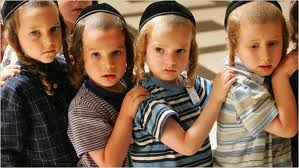
Jewish kids

wonderful holiday that should remain forever Jewish. As Christmas, a celebration, for those who are keeping score, of the birth of Christ is, and should always remain Christian. That Santa should have no color is preposterous. That the spirit of Christmas should have no color is something to strive for. I can only hope that one day, children will honor and celebrate the spirit of each other’s ethnic holidays and appreciate the wonder of their differences.

Black kids

The commercialization of Christmas in America has turned a once charming tradition into a frenzy of gift giving that borders on the ridiculous. The spike in the suicide rate at Christmas time has a direct correlation to the obligation Americans seem to feel to give the right gift, and the disappointment and shame they feel when they fail to do so. Bargain sale days like black Friday, which allegedly exist to help shoppers fulfill their obligatory purchases for the upcoming gift swapping conflagration that Christmas has become, have become so competitive that gift-hungry buyers line up sometimes several days in advance to assure their purchases at the right price. This holiday season has so far seen three deaths at shopping venues, two by gun shot wounds, as frantic shoppers compete, sometimes violently, for the discounted price.

Traditional icons of the Christmas celebration, like Santa Claus, have lost their luster, and their connection to the idea of Christmas. As commercialization overtakes ritual,

Menorah

Christmas loses the charm of its identity, and morphs into the struggle of buying, and giving, and returning, and the never-ending obligation to succeed in the frenzy of finding the perfect gift. Americans have long ago lost touch with the origins of this Holiday and the traditional characterizations that have always accompanied the

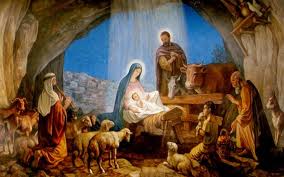
Nativity Scene

celebration. So, Santa Claus, a product of centuries of folklore, becomes a plastic, red and white, bearded face on a front door. We no longer think of him as flesh and blood – the jolly white-bearded, bearer of Yultide gifts, driving his reindeer and sleigh through the skies to bring joy and gifts to the children of the world. He’s been lost in the amalgamation of the idea into the commercialization of the moment.

So just why, exactly, do Liberals think Santa has no color? Are they so guilt-ridden that they busy themselves creating an antidote to offending absolutely anyone? Do they really think that Black children can’t relate to a Santa who is white? Do they

Hasid with paes

really think that black children see the world as grey? Do they really think that black children are oblivious to the fact that there are black people, and white people, and yellow people, and brown people? Are they so lost in the androgyny of their morality that they’ve gone on the permanent defensive against the celebration of anything unique or individual?  Do they really feel that playing the role of the morality police compensates for a lifetime of questionable decisions and behavior? Do they really think they can throw us all in the blender, obliterate our differences, and turn us into them? Just what exactly are they afraid of? Why can’t Santa be white – the guy is from Poland.

Santa in sleigh

*

 © 2013 Shaun Costello

Keep SHAUN COSTELLO’S BLOG up and running.
Creating and maintaining this BLOG is time
consuming. If you like what you’ve been reading,
please help me keep it going.
DONATE ANY AMOUNT Through PAYPAL at:

THE FIRST REVIEW OF “WILD ABOUT HARRY”

Harry cover alternative two

From The Erotic Film Society in London

The first review of:

WILD ABOUT HARRY

by Shaun Costello

For such a prolific director – at least 66 films between 1973 and 1984 – Shaun Costello remained one of the New York XXX scene’s best kept secrets for many years. One reason is the number of noms-de-porn he worked under.

He made more than his fair share of films that are now recognised as classics but not always under the same name – he was ‘Kenneth Schwartz’ for FIONA ON FIRE but ‘Warren Evans’ for DRACULA EXOTICA, for example – and this prevented him from getting due recognition until relatively recently.

For notorious roughies FORCED ENTRY and WATERPOWER, he was ‘Helmuth Richler’ but ‘Amanda Barton’ made the sensitive PASSIONS OF CAROL. At Avon Productions he was ‘Russ Carlson’ and for a while he was even ‘Oscar Tripe’; plus there were numerous uncredited one-day-wonders.

In ONLY THE BEST, published at the dawn of the video era, critic Jim Holliday indicated that one person was behind some of these pseudonyms; but pre-internet it was pretty much impossible for even dedicated pornologists to crack the Costello code.

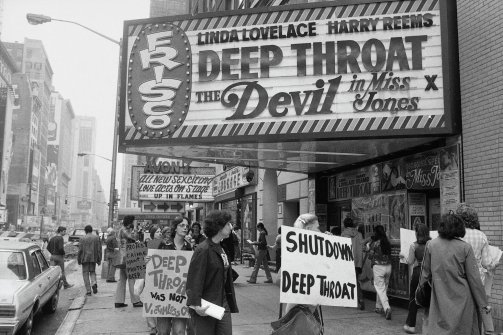
Public outrage at Deep Throat's popularity

Public outrage at Deep Throat’s popularity

With the advent of the web, the IMDb and IAFD and dedicated discussion forums where smut-hounds could compare what they’d discovered, facts began to surface.

Then something occurred that every film historian dreams about; Shaun Costello himself joined the forums. He posted on IMDb. He corrected. He clarified…   And suddenly his incredible career came into sharp focus.

Not just those 66 films that he helmed but around the same number of appearances from 1971 to ’89 – and that doesn’t include loops – plus at least 50 films he produced and a similar number of writing credits. It’s a wonder he ever found time to sleep.

On the evidence of WILD ABOUT HARRY, his by turns hilarious and moving memoir about his friendship with Harry Reems, during the pre-DEEP THROAT days of Big Apple hard-core, sleep was often the last thing on his mind.

Whether he was editing into the early hours – the only way he could afford post-production facilities – or heroically carousing with his buddies – ‘the Three Musketeers of 42nd Street’ – those years in the late 60s and early 70s seem to have been one madcap adventure, where anything was possible.

Harry and Linda Lovelace in DEEP THROAT

Harry and Linda Lovelace in DEEP THROAT

A voracious film fan, from art-house masters to grindhouse smut, Shaun absorbed everything. He fell into the pornographic loops business by happy accident, just as they were on the borderline of becoming legal, or at least tolerated, in the adult bookstores of the Deuce.

And he was there when a handsome, young, legit actor – still known by his birth name, Herb Streicher – made his debut in an explicit 8mm film destined for ‘under the counter’ sales.

(Assumed names were cast aside faster than underwear: Herb wouldn’t settle on Harry Reems for a couple of years, after he’d tried on ‘Tim Long’ among other aliases.)

It wasn’t just the start of a professional relationship – Shaun cast Herb/Harry as a disturbed Vietnam Vet in FORCED ENTRY, his first feature as director – it was the beginning of a deep friendship.

And now Shaun has published this memoir of those heady days – and that double entendre is very much intended – as a tribute to his buddy, who passed away in March of this year.

Anyone who knows the recipe for Automat Soup (a container of ketchup and hot water, if you’re asking – gourmets break some gratis crackers on top to simulate croutons) will probably already have a copy.

The United States of America v Harry Reems

The United States of America v Harry Reems

But what if you’re not a dedicated devotee of the Deuce and are wondering whether to purchase? Or what if you – horror – have to ask, ‘What’s the Deuce’? Well, let Mr Costello explain…

‘The Times Square subway station, my portal to the neighborhood, was an intense assault on the senses. A sudden, almost overwhelming surge of smells and filth hit you as the train doors slid open to the rush of urine, and cotton candy, and damp humanity, and hot dogs on their revolving spits, and vomit, and baked goods like crumb cakes and bran muffins and pretzels, and the garlicky pungent scent of Gyros slowly rotating, and everything suddenly interrupted by someone chasing a pick-pocket through outstretched hands asking for dimes, and a tidal swarm of the disenfranchised huddled in groups, trying to stay warm. And this entire sensory phantasmagoria was musically scored by the overmodulated sound of Kool and the Gang wailing “Jungle Boogie” from the cheap speakers over the door to the subterranean record store. And then the cold again as you climbed the stairs to the street, and there it was, “The Deuce”.’ (from WILD ABOUT HARRY © 2013 Shaun Costello)

From this vivid evocation of arriving at 42nd Street, you should immediately have discerned that our guide to all this decadence has a very neat turn of phrase indeed, which he puts to fine effect throughout the book.

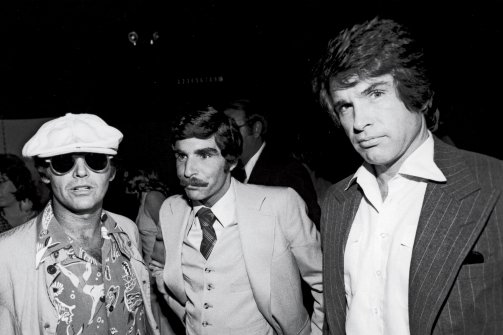
Jack Nicholson and Warren Beatty come to Harry's rescue

Jack Nicholson and Warren Beatty come to Harry’s rescue

It’s prose that encapsulates the sights, the sounds, the smells, the animal excitement of the city – and the only reason not to enjoy it is that it makes you break down and cry, lamenting the passing of such delightful debauchery.

Herb being Harry, and enjoying himself

Herb being Harry, and enjoying himself

‘Delightful debauchery’? Well, yes. Shaun Costello is aware of the oxymoron. On the one hand, he’s a cultured chap, dating a wealthy heiress. On the other, he’s working his way up the porn ladder.

And he’s having fun all the way, along with his lifelong friend Jimmy and – of course – Harry, who is seemingly ever ready for an adventure. Such as one hallucinogen-fuelled romp which takes them from Times Square to the East Side via various apartments whose inhabitants are woken at unearthly hours, before disgorging them on a pitch-and-putt golf course by the beach… all described with a panache that matches Hunter S Thompson’s knack for conveying altered reality.

When DEEP THROAT made Harry a porno chic superstar, his world suddenly became a round of press and promotion and personal appearances, followed equally swiftly by the traumas of the authorities’ attempts to prosecute him for merely appearing in the film.

During this period, Shaun lost contact with his buddy, so he has to rely on the interviews that Harry made when he reappeared from anonymity (he’d become a real estate salesman in Colorado) in the wake of the documentary INSIDE DEEP THROAT, to describe what happened.

Initially I was worried that this could turn into a cut and paste job, but Costello has chosen and edited the quotes with great sensitivity.

Fanny was a Puerto Rican stripper who taught young Herb everything he knew about sex

Fanny was a Puerto Rican stripper who taught young Herb everything he knew about sex

It’s rather like that moment in a jazz number, when the star soloist comes forward. We’ve enjoyed Shaun talking about his friend and now we get hear Harry’s own voice.

And what a lovely voice it is, especially talking about his conversion to Christianity and the spiritual belief that saved him from alcoholism (with the aid of a 12 step programme).

This sort of tale could so easily be preachy. And how often have former porners turned on the business, their former friends, their whole past life, when they found God?

But Harry – or Herb – was clearly such a sweet guy – and his story of salvation comes over as so genuine – that even if you don’t believe yourself, you can’t help but feel glad that he found that faith because it saved his life.

And then there’s a coda: a meeting years later; a final phone call. It’s deeply touching and heartfelt. Shaun Costello has written as beautiful a tribute as anyone could imagine. Any quibbles? Just one. I was left ravenous for more of Shaun’s own autobiography. From his contributions to various forums, I know he has great tales to tell and that he tells them in an exceptionally entertaining manner.

Herb/Harry found love, God and happiness in the mountains of Utah

Herb/Harry found love, God and happiness in the mountains of Utah

   WILD ABOUT HARRY

is available as an eBook

http://store.blurb.co.uk/ebooks/384584-wild-about-harry

Keep SHAUN COSTELLO’S BLOG up and running.
Creating and maintaining this BLOG is time
consuming. If you like what you’ve been reading,
please help me keep it going.
DONATE ANY AMOUNT Through PAYPAL at:

WHY I’M NOT SURPRISED THAT MARK JACKSON BECAME A SUCCESSFUL NBA COACH – AFTER ALL, ONCE UPON A TIME, HE SAVED MY ASS AND MADE ME A HERO

by Shaun Costello

I was born and raised in New York City, commuted to High School by subway – a real city kid, and dedicated gym rat. When it came to basketball, I rooted for the New York Knickerbockers. After all, they were the city’s team, my team. Over the years I rode the roller coaster of highs and lows that the sometimes magnificent, sometimes dreadful New York Knicks provided for their loyal and befuddled fans. I remembered the names of all of the players and their many coaches – even some of the assistants. This is the plight of kids who grow up as gym rats, and who, once upon a time, thrilled to the peerless ballet performed on the floor of Madison Square Garden by the likes of Willis Reed, Dave Debuscher, Frazier,

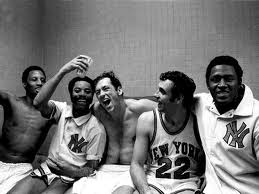
Champ Knicks

Monroe, Lucas, and the rest. You become a hopeless case, who dreams the impossible dream, of your team, the city’s team, returning to its former glory, even though, with passing years, those days of glory had long since faded into the distant past.
During the Eighties, I made a very good living directing television commercials for New York advertising agencies. In early September of 1989 I was handed a story board from Grey Advertising containing their concept for an ambitious television commercial for none other than my beloved New York Knicks. I was beyond thrilled. If my production company was awarded this project, the entire team would be turned over to me for one whole day.

Boardroom pic

OK, long story short; the agency creatives liked my input, the suits gave the go-ahead, and the job was mine.
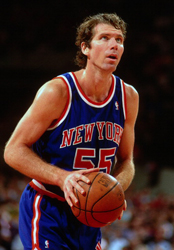
Now, this was the 89/90 Knicks – the Patrick Ewing/Charles Oakley/Mark Jackson/Trent Tucker/Kiki Vandeweghe/Gerald Wilkins Knicks. The team that came between the Rick Pitino trap and gun blur of the mid Eighties, and the Pat Riley-led NBA Finalists of the mid Nineties. A good, but not great team, filled with journeyman role players. Of course, how good they were was meaningless to me. All I could think about was that the New York Knickerbockers were going to be mine for a day.
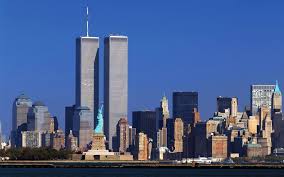
The commercial would be a complicated combination of live action (Knicks players) interacting with recognizable pieces of New York City’s skyline

Skyline

(Empire State Building, Pan Am, World Trade Center, etc). The players, who would appear to be hundreds of feet tall, would dribble, pass, and dunk their way through Manhattan’s caverns, using the famous buildings as props. I spent seven shooting days carefully photographing the buildings, so that they would match the intended interaction of the players. We would need the largest soundstage in the city, to accommodate the players, who were taller than I ever imagined, and the building cut-outs with which they would interact. Locked-down cameras were set up in position to photograph the cut-outs, which were carefully constructed to exactly match the buildings I had already photographed, and the Knicks personnel, who would appear as giants, doing their thing. The cut-outs would be painted a color that the computer animation system would recognize, hopefully allowing the intended magic to happen. On the studio floor, the action would appear to be basketball players weaving between huge green set pieces, but on the monitors that were set up all over the building, my original footage of the skyscrapers would be sandwiched with the new shots that included the players at work. Patrick Ewing, and his giant

Ewing Jackson. 2 jpg

shadow, would appear to be three quarters the size of the World Trade Center. To do this right, the camera set ups had to be absolutely exact, and this would take several days. In order to simulate the action during the complicated set-up, crew members and agency personnel stood in for the players. The problem was, that none of our crew people or art directors was seven feet tall, but this didn’t seem to matter at the time. Once we were convinced that the set-ups were correct, we were ready for the players. The team was in training, preparing for the upcoming season, and we would only have them all together for one long shooting day.
I arrived early the morning of the shoot. Everything had been set up by the time we left the studio the night before so, other than turning on all the lighting, and technical gadgetry that covered the studio floor, not much had to be done. I had assigned a production assistant the important task of taking still production photographs of the director, and former gym rat, interacting with his heroes throughout the day. In addition, I handed him my very own personal basketball, with instructions to get every player to sign it – reasonable perks for a lifetime fan.
Whenever celebrities were involved in a production like this, an unusually large number of hangers-on were sure to show up. Between Grey Advertising, the Madison Square Garden handlers and publicity staff, the production company, and all of the personal management people who represented the individual players, there must have been well over a hundred gawkers, who were there for a free lunch and a glimpse of Charles Oakley’s sneer.

Oakley

This was in addition to the twenty five crew members who were already busy warming up the production machinery. And, of the approximately 125 people now waiting for their arrival, I was sure that I would be the only one in the building who knew each and every player by name. A lifetime Knicks fan was about to get his due.
Other than Trent Tucker, who lived in Manhattan, and was already sipping a coffee on the studio floor, the team would be bussed down from their training facility in Westchester. After a pleasant Chat with Trent, I was

Trent

informed that the team had arrived, and were all upstairs in the dressing rooms. My heroes, here at last. The first player I noticed was Kiki Vandeweghe, who was sitting in a chair in the make-up room, having some pancake applied to his face. I introduced myself, and he cheerfully engulfed my outstretched hand in his own, the largest hand I had ever seen. I felt like a three year-old, shaking hands with an affable gorilla. One by one, I met the players, who seemed happy to get a day off from the rigors of training camp and, this early in the day, were in a playful mood.
Down on the studio floor, the players mingled with crew people, asking questions about the technology involved in this endeavor, looking in camera viewfinders, seemingly happy to be there. The two players who took particular interest were Mark Jackson, and Gerald Wilkins, who asked intelligent questions, and seemed genuinely fascinated by the technology involved in the production.

Mark plays

Jackson, who addressed me as “Chief”, which almost made me swoon, was relentlessly curious about everything we did. He seemed amazed by the artistry, and wanted to know all about the technology we used to achieve it. I introduced him to our chief video engineer, and walked over to the edge of the studio floor, where Patrick Ewing was sitting all by himself. Now, I’m just not used to being in the presence of anyone seven feet tall, and have to admit to being intimidated by his knee being level with my waist. I asked him if he needed anything, and he shrugged and said he was fine. A few minutes later, I noticed my assistant director, a woman considerably more sensitive that I, approach Patrick, who still seemed aloof.

Mark plays big

She slid her arm around his sitting shoulder and gave him a half hug, and his face lit up like a Christmas tree. Patrick wasn’t aloof – he was just shy.
At some point Stu Jackson, the newly hired Knick’s coach made a brief appearance. He asked me if everyone was behaving, and left after a few minutes. Actually the players, with the possible exception of Charles Oakley who had on his snarly game face, were a cooperative bunch. As we began the first set-up, it became obvious that something was wrong. When Oakley or Patrick Ewing stood next to our precious cut-outs, the scale was off by a mile. A common practice in prepping a production, we had used crew people as stand-ins when we constructed the sets. The problem, which was now obvious, was that crew people are not seven feet tall, and that none of our carefully constructed building cut-outs would work with the actual players. I had a very expensive disaster on my hands. We told the team to take a break, and had a crash meeting. Everything would have to be at least two feet taller. All the set-ups, that had taken so many long days to achieve, would have to be redone, and in a hurry. The construction crew attacked the task at hand, and we would have to go through the day shooting one set-up while constructing the next; a noisy, distracting process.

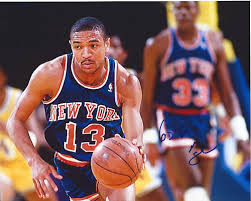
New York Knicks v Portland Trailblazers
Somehow we managed slowly shooting set-up after set-up, the crew becoming exhausted and cranky, but the players, again with the possible exception of Oakley, were real troopers and none of them complained about the time all of this was taking. After ten hours of shooting, and well into overtime, we were ready for the final shot, which would be the whole team, forming a semi-circle, standing along the edge of Madison Square Garden’s cylindrical roof-line, high-fiving each other, and exuding the energy and confidence of a sports franchise ready to kick some butt. The enormous cylinder shaped platform that the players would stand on had been raised a good five feet by the construction crew, while we were shooting the other set-ups. This would be the big shot. The players climbed up on the platform, and I arranged them in an order that made sense in the camera. The choreography of this shot took at least another hour and, by the time everyone was in position, they hardly looked like the high-energy butt kickers I has envisioned, but instead just a bunch of tired guys who wanted to go home. We began shooting and, take after take, the team seemed more and more exhausted. Payroll wise, we were now into ‘Golden Time’, the client was grumpy and becoming nervous, the crew was sleep-walking, my heroes appeared very unheroic, and my ‘big shot’ was just not working. Just about the time I considered killing myself, I heard a familiar voice from up on the platform. “Hey Chief, wait a second”.

mARK PIC

It was Mark Jackson, who jumped down from the platform, took me by the arm, and led me off somewhere beyond the earshot of the huge crowd of gawkers who had been watching this disaster in the making. “Look”, he said, “There’s no energy here. It’s late. These guys are beat. You’ve got to wake them up”. I could only nod, grateful for his interest, but almost too tired to respond. “Look Chief, these are performers you’re dealing with here. They need something to respond to. They need a crowd to cheer them on like it’s the last minute of overtime and they’re one point down. They need their fans to get behind them and make some noise”. Of course, he was absolutely right. He saw the situation, found the problem, and came up with the appropriate solution. Mark took his place back up on the platform, and I rallied the troops. I had to turn every crew person, gawker, and corporate freeloader on that studio floor into frenzied, screaming sports fans, rallying their heroes on to victory. I told the exhausted, yet somehow still cooperative players that we would try one more take, while Mark Jackson poked and prodded them into laughing and trash talking. The camera began rolling, and I began screaming at the people on the floor to get behind their team. As the noise level grew louder, the energy level of the players grew as well, until the crowd, who had now gathered close around the platform, was a delirious cacophony of deafening encouragement to twelve tall men who had totally bought into their enthusiasm. Trash was talked, high fives were swapped, someone threw a basketball up to the players and they did mad tricks with it. It was exactly the high energy madness I had envisioned, but was unable to achieve, until Mark Jackson wisely intervened with exactly the right solution. This very expensive disaster, was transformed into an enormous success thanks to a guy who saw a problem, and knew how to fix it.

Mark holds mike
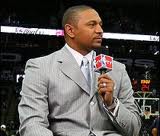
I can remember thinking at the time, that one day, after his point guard days were over, Mark Jackson would have a long and successful career coaching NBA basketball. He was a natural. A leader of men. A fixer of problems. He walks with a swagger that’s been earned. He would be a brilliant coach. But, although he interviewed well, he was turned down by a series of teams because of his lack of coaching experience. After retiring as a player, Jackson chose the broadcast booth over an Assistant Coach’s seat on the end of the bench, and most teams chose from the pool of Assistant Coach’s to fill their Head Coaching vacancies. I knew Jackson’s manager, Steve Kauffman, and sent him a version of this humble scribbling, which he used in his campaign to find a Head Coaching job for his client. I’m sure that my literary plea on Jackson’s behalf had little to do with the San Francisco Warriors final decision to give Mark Jackson his chance as their Head Coach, but I’m thrilled to have helped.
Warriors name Mark coach

After his extraordinarily successful first season, there’s little doubt that Mark Jackson is a coach to be watched, something I knew all along. After all, if Mark Jackson could turn my miserable self into a hero, winning an NBA championship is really not so much of a stretch.

*
© 2012 Shaun Costello

Keep SHAUN COSTELLO’S BLOG up and running.
Creating and maintaining this BLOG is time
consuming. If you like what you’ve been reading,
please help me keep it going.
DONATE ANY AMOUNT Through PAYPAL at:

I’M STILL HERE

I’M STILL HERE

 My flirtation with mortality was obviously unsuccessful. After 12 days in the hospital, I’m still weak and not at all sure about anything. One thing is certain, my situation remains unchanged. I still can not meet my monthly financial obligations. Ridiculous as it might seem, homelessness remains a possibility. But I’m still here, and attempting to remain here.

Keep SHAUN COSTELLO’S BLOG up and running.
Creating and maintaining this BLOG is time
consuming. If you like what you’ve been reading,
please help me keep it going.
DONATE ANY AMOUNT Through PAYPAL at:

WILD ABOUT HARRY

WILD ABOUT HARRY

A friend who knew him well

remembers HARRY REEMS

by Shaun Costello

AVAILABLE NOW

WILD ABOUT HARRY (Coiver)

AVAILABLE NOW

On March 19th, just three weeks ago, HARRY REEMS, the star of Deep Throat and many other adult films of the 1970’s, died of pancreatic cancer, at a VA Hospice in Salt Lake City, Utah. Before the media circus that surrounded Deep Throat created the fast talking, Burleaque-comedic actor know as HARRY REEMS, he was just a young man, trying like so many before him, to make it in show business. He was born Herbert Streicher to a Jewish family in Brooklyn, and was a close friend of mine. When I read the news of his death I was devestated. So many rich memories. Such an important friend. I knew I had to do something, so I put everything else aside, and sat down to write a personal reminiscence of my friendship with Herb. I have worked almost around the clock, since the day after his death, and finished the text yesterday. I’m very pleased with how it came out. I think Herb would be too.

Herb and Harry – a dichotomy he leaves behind for the rest of us to puzzle over. As Herb he was a son, a brother, a Bar Mitzvah boy, a High School track star, a student, a Marine, an aspiring actor, and a loyal and generous friend. As Harry he was a porn icon, an international celebrity, a darling of the TV Talk Show circuit, a victim of judicial overreach, a convicted felon, a finally-absolved and victorious defendent, a drunk, a drug addict, a Twelve Step Champion, a converted Christian, a successful real estate executive, a scratch golfer, a semi-pro skier, a loving husband, and, at long last, a happy man.

WILD ABOUT HARRY is a hard cover, eight by ten, four color book – text driven, and including over a hundred four color and black and white, fun images of HARRY’S life. It’s being printed on an on-demand basis and is available now at the link below:

http://www.blurb.com/b/4214470-wild-about-harry

 I’m quite pleased at how this story came out, and, for those of you who have a fascination with the Seventies, the birth of the adult film industry, the First Amendment trial and media circus that surrounded the prosecution of Deep Throat, and the complex character that was HARRY REEMS, you will be too.

AVAILABLE NOW – CLICK ON LINK BELOW

http://www.blurb.com/b/4214470-wild-about-harry

****************

NOW AVAILABLE AS AN eBOOK FOR iPAD: $ 9.99.
Keep SHAUN COSTELLO’S BLOG up and running.
Creating and maintaining this BLOG is time
consuming. If you like what you’ve been reading,
please help me keep it going.
DONATE ANY AMOUNT Through PAYPAL at:

SWINGERS


SWINGERS 

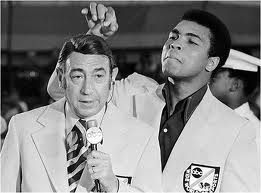
Rick was narrating my sexual experience with my screaming blonde friend, like Howard Cosell calling the Thrilla in Manilla 

By Shaun Costello

sw illustration 

Excerpted from the “Seventies” manuscript:

RISKY BEHAVIOR

Sex, Gangsters, and Deception in the time of ‘Groovy’

My girlfriend Ann had taken a job working for an aging literary agent named Kurt Hellmer who, because of his advancing age, had let his business slip, and had lost many of his authors.  Ann, who was the best-read person I knew, was a quick reader with amazing retention, and she seemed to have a knack for spotting publishable manuscripts from the huge slush pile that came across her desk daily. My continuing porn involvement was not spoken about, and my plan to sell the golf film that Bill and I had made the previous summer to a television network seemed enough for Ann to tell her parents about, in order to justify her continued involvement with me.

sw five towns shirt

She had been talking for a while about the two of us trolling a “Swingers” bar, looking for some erotic adventure. Ann considered herself to be on the vanguard of the sexual revolution – a master player in the game of erotica. But none of this was true. She was just a smart, manipulative “Five Towns” girl who had read too much Anais Nin, and derived considerable pleasure from creating embarrassing scenarios for her malleable and impressionable roommates from Long Island to play out. Ann herself however, seldom took risks, being uncomfortable in situations she did not control. Not wanting to be involved in one of her ridiculous sociological experiments, I made a series of excuses for not participating, but Ann was relentless. The more I resisted, the more she demanded my involvement, until finally, I gave in from sheer exhaustion. But I knew it was a mistake. Ann in a party full of Swingers? This had disaster written all over it.

sw voice

She searched through the alternative classifieds, and came up with an ad that seemed perfect. There was a restaurant down in the financial district called “Smitty’s” that served lunch to stock brokers and, because there was no night-time business in that area, they leased the place out after-hours to groups who hosted private parties. The ad in the Village Voice suggested that these parties were attended by open-minded couples, and that no single men were allowed.

sw smitty's

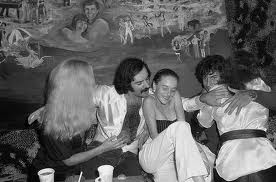
 We arrived about nine on a Friday night. The price was ten dollars a couple, which seemed reasonable enough, and there were maybe a hundred people already milling about. Ann was a very attractive 23 year-old cutie, so most eyes in the room followed our every move. About half the crowd was out on the dance floor gyrating to Elton John’s Bennie and the Jets, and one by one, we were approached by couples looking to hook up. The MO seemed to be that couples met here at Smitty’s, and then gathered later on at private parties for

sw pic 1

some intimate activities. As we met more people I became aware of an odd phenomenon. The men made all the arrangements. Women took no initiative and seemed satisfied to be included in the coupling negotiated by their male partners. Women’s lib did not seem to have affected the Swingers set. After several private-party offers we were approached by a couple named Rick and Ione. They were a bit older, and of course Rick did all the talking. They were having a few couples over to their apartment later, and maybe we might like to join them. “And Shaun, maybe you would like to dance with Ione”. Ann and I exchanged looks, and Ione led me out

sw twww

to the dance floor where we slow-danced to Barbra Steisand singing “The Way We Were”. Ione made sure that our crotches were seriously grinding against each other and told me that this song always made her cry, which she proceeded to do. As we slowly did our turn on the dance floor Ione looked up at me, Streisand-induced tears running down her cheeks and said, “I saw you when you came in. I want you in my mouth. I want you in my mouth now”.

Their apartment was on West 54th Street, between Broadway and Seventh Avenue, and about ten couples had been invited. Ann, who seemed extremely nervous, was off somewhere doing god-knows-what with Rick, while Ione led me into her bedroom. Along the way she had taken a female friend in tow, and proceeded to slowly undress us both. She had closed the door, assuring our privacy, which I thought was a nice touch. Ione’s idea was to choreograph a sexual encounter between myself and her girlfriend, and participate as she saw fit during carefully chosen moments. I have to confess here that it was exciting, within limits, and that Ione, although several years older, was imaginative, and resourceful. I also have to admit to thinking, at the time, that I was living out a scene from one of my own movies. She spread me across her bed, placing her girlfriend over me but facing away. Ione was extraordinarily proficient at oral sex on both men and women, or at least she professed herself to be, and proceeded to slowly lick and suck each of her co-conspirators in this frolic, as she drew us closer together in the process, until we were joined.

Ione was at the bottom of the bed, her noisy mouth glued to our genitals, and as the motion grew faster and mutual orgasm seemed approaching on the near horizon, Ione suddenly, but assuredly,

sw teeth

like she had done this many times before, knelt up, reached into her mouth, and removed her teeth. Well, this was certainly a startling development. “There”, she said, “This will make it better”, and she leaned over and put them on the night table right next to my face, and resumed her oral endeavors with a new fervor. I guess it probably did feel better, but the sensation of the joined male and female genitalia, enthusiastically licked and slurped by Ione’s tongue, not to mention Ione’s gums, was just not as fulfilling when, right next to my head, were Ione’s dentures; a full set, uppers and lowers, a whole mouth full of teeth, like something you saw in a gag store that wound-up and chattered. At this point comedy overtook erotica and, although we somehow took this cumbersome adventure to completion, my heart was just no longer in it. Post-coital Marlboros were passed around, and Ione didn’t seem to need her teeth to smoke.

sw pic 3

I wandered out into the common area of the living room, where mixed groups seemed huddled in twos and fours, touching, and munching on each other’s body parts, while others were sitting naked on the couch watching Johnny Carson.  Ann was nowhere in sight, which relieved me of the responsibility of making sure she was enjoying herself, a burden she seemed to relish delegating to others, usually me, which never really worked, but that fact never kept her from trying. Ann’s happiness was my responsibility, in the world according to Ann.

A young, cute blonde girl, maybe twenty, came out of the kitchen, grabbed my hand, and led me to the other side of the room. ‘Where have you been?”, she asked, “I’ve been looking for you”. I had noticed her dancing back at Smitty’s, and thought she was pretty cute, but hadn’t seen her at Rick and Ione’s until this moment. As she started swallowing my face I realized that my intermission was over. I ate her for a long time. She was sweet, and responsive, and came at least twice before I removed my mouth from her clitoris. We seemed to have become the main attraction, as most of the party guests gathered around us in a circle. She turned over on her stomach and spread her cheeks apart. “Shove it in my ass, go ahead, give it to me, give it to me.” Well I didn’t have to be asked twice. I could sense the crowd drawing closer around us as I started fucking her harder. “Hurt me. C’mon, hurt me”. And I was fucking her much harder now, and we were soaked with sweat, and she was screaming, and all of a sudden I became aware of someone’s mouth very close to my ear softly saying, “They met in a swingers bar. When she saw him across the room she knew she had to have him. She knew he would do her bidding, no matter what she asked. Anal

sw cosell

sex was what she needed and she was going to get from him no matter what”.  I looked to my left, and it was Rick, who was narrating my sexual experience with my screaming blonde friend, like Howard Cosell calling a Mohammad Ali fight. “She wanted to experience the shame of anal penetration. To be subjugated by his masculine will. By his strength. By the pounding of his cock”.  And my partner, who seemed to not hear a word of this narrative blow by blow, was still screaming for me to hurt her, over and over again. Rick softly, but audibly continued his narration to the delight of the crowd of sweaty party goers who seemed caught up in the whole rhythmic, slamming, screaming, narrated event, until she came, and I came, and we melted into a puddle of two sweaty swingers, and all I could hear was the sound of our breathing; and of course Rick, whose relentless narration continued. “She felt the intrusion of his manhood deep within her willing rectum, burning her, scalding her into a submissive jelly. Tonight she got exactly what she needed”. Well, nothing like a good narration to put things in perspective.

sw taxi 1

In the cab on the way home I asked Ann why she was being so quiet. “Don’t even talk to me”, she responded. Evidently I was guilty of something. Crimes against Ann, no doubt. “How could you?” she asked. I remained silent because it seemed like the best course to take. “You went down on her”, she scowled at me. ‘You never go down on me. Never. And you went down on that waitress, or dental assistant, or whatever that stupid slut was”.  A bit judgmental on Ann’s part. The girl might have been an astronaut.  “Ann, this whole thing was your idea, remember?” An attempt at making sense got me nowhere. Ann was insistent, “A stranger. You ate out the cunt of a stranger. What about me? What about my cunt? What about me?”

We remained silent for the rest of the cab ride, and I let Ann out at her building on East 48th Street, then headed home. Why did she ever leave her husband, the Doctor? Why did I let her talk me in to doing this? Probably because I knew that something amusing would happen, and it did. I thought about Ione’s teeth all the way home.

 sw pic

*

© 2013 Shaun Costello

Keep SHAUN COSTELLO’S BLOG up and running.
Creating and maintaining this BLOG is time
consuming. If you like what you’ve been reading,
please help me keep it going.
DONATE ANY AMOUNT Through PAYPAL at:

BEST OF THE WEST

BEST OF THE WEST

Hollywood’s All-Time Ten Best Westerns (the movies – not the motels)

By Shaun Costello
 W A

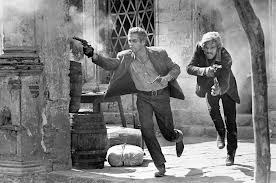
The Western, being Hollywood’s favorite entertainment genre, was produced in such numbers that the sheer volume of titles makes the job of narrowing the field to only ten just about impossible. Maybe, the first task is to define the genre – just what exactly is a Western Movie? The stranger, who shows up in the nick of time to save a town from corrupt land owners – SHANE? The town Marshall who single-handedly takes responsibility for the safety of his town, even though the very people he’s protecting run for cover, and refuse to stand behind him – HIGH NOON? A noirish cavalcade of over-the-hill characters trying to make a buck on aging reputations – UNFORGIVEN?  Cowpokes, banding together, against all odds, to make the impossible journey – RED RIVER? A tale of vengeance, and the collecting of odd souls, as a man seeks out the men who murdered his family, only to find salvation in something more important – THE OUTLAW JOSEY WALES? The saga of men who had outlived their era, and couldn’t seem to adapt to reality – BUTCH CASSIDY AND THE SUNDANCE KID?  The answer, of course, is yes to all of these, as well as the other titles on this list.

But what must we eliminate? Here’s where I begin to make enemies. First, the Seven Samurai clones: THE WILD BUNCH, THE MAGNIFICENT SEVEN, and THE PROFESSIONALS – three of my all time favorite movies, but not true Westerns, not really. Next, anything with singing – sorry, Gene and Roy. And how about all those dark, cerebral, recently made Westerns, starring country western singers with long hair, and giant hats, wearing those ankle-length duster-coats, that seem to make Nascar fans swoon – Nah! Let’s stick to the best of the genre. And let’s also remember that we’re doing the subjectivity shuttle, here. Everyone has their favorites, and I know there are die-hard Peckinpah fans out there, who would rather go down in a hail of squibs, than turn their back on THE WILD BUNCH, but this is MY list, and it’s tough to whittle it down to just ten. For purpose of full disclosure, I have to admit to breaking one of my rules here, which is to never list a movie that’s been on one of my previous lists, but RED RIVER is one of the greatest films ever produced by Hollywood, and it’s a Western, so it’s here. Get over it.


So, in alphabetical order:


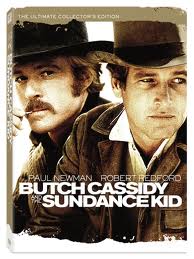
BUTCH CASSIDY AND THE SUNDANCE KID

      1969   George Roy Hill            

                                                                                                          (Four Oscars)
   

W Butch poster 

Hey, it was the Sixties, and if ever there was a Sixties western, it’s this memorable saga of Butch and Sundance. William Goldman’s tasty screenplay is loosely based on real events, so here is some background:

W Butch 2

Robert LeRoy Parker (April 13, 1866 – November 6, 1908/1936?), better known as Butch Cassidy, was a notorious American train robber, and leader of the Wild Bunch Gang in the American Old West, doing most of his mischief in Wyoming and Montana from the 1880’s through the turn of the century. After pursuing a career in crime for several years in the United States, the pressures of being pursued, notably by the Pinkerton Detective Agency,

W Butch 6

forced him to flee with an accomplice, Harry Alonzo Longabaugh, known as the Sundance Kid, and Longabaugh’s girlfriend, Etta Place, first to Argentina and then to Bolivia, where he and Longabaugh were allegedly killed in a shootout in November 1908.

OK, back to Hollywood. This movie is many things on many levels, and all of them good, which almost never works, but in this case, worked to perfection. Enough beautifully staged action to qualify as

W Butch 8

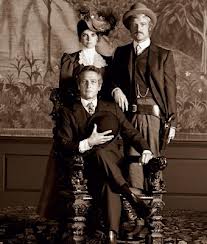
a solid action film, Goldman’s brilliant and hilarious screenplay, which makes it an engaging comedy, and the inevitable, tragic ending, which you knew somehow was coming, but that happens so quickly that it doesn’t sour the film’s success as the ultimate, happy go lucky Buddy Movie. From the trick opening, to Butch and Sundance’s demise in a hail of Bolivian bullets, the movie never loses its focus, probably due in equal parts to Newman and Redford’s chemistry, Goldman’s script, and George
W Butch 7

Roy Hill’s adroit direction. Katherine Ross, as the Kid’s gal pal, is lovely to look at, and nice ensemble work by a game cast. Solid lensing by Conrad Hall, who moved in with Ms Ross during the shooting, and a lovely score by Burt Bacharach. The huge worldwide Box Office would encourage producers to come up with an appropriate vehicle to repackage the Newman/Redford magic, which would happen five years later in another George Roy Hill blockbuster, The Sting. 
W Butch 

http://www.youtube.com/watch?v=X41Ylp02NRs


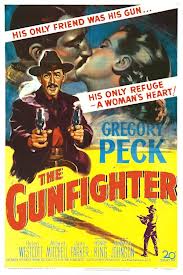
THE GUNFIGHTER    1950    Henry King
W GF poster 2  

The problem with being a gunfighter, it seems, is that everybody wants a piece of your street cred.

Notorious but aging gunfighter Jimmy Ringo (Gregory Peck) tries to avoid the trouble that goes with his reputation as the fastest draw in the west. However, when a cocksure cowpoke named Eddie (Richard Jaeckel) deliberately provokes an argument and draws on him, Ringo has no choice but to kill him. Ringo is warned to leave the area because the deceased has three brothers who are certain to seek revenge. Sure enough, the brothers pursue him, but he takes them by surprise, disarming them and driving off their horses.

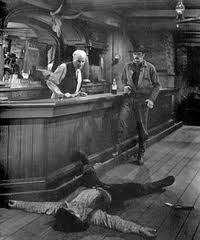
Ringo then stops to wait in the nearby town of Cayenne, where he occupies a corner of the largely empty saloon for most of the remaining film. It is only revealed later that he is hoping for a chance to see his wife and young son, whom he has not seen in
W GF 1

eight years. The local barkeep, Mac (Karl Malden), remembers him from the past in another town and alerts Sheriff Mark Strett (Millard Mitchell), who turns out to be an old friend of Ringo’s. Strett also knows Ringo’s wife Peggy (Helen Westcott), and tells Ringo she has changed her surname to hide their past life together. Urging Ringo to leave town as quickly as possible, Strett nevertheless agrees to go and ask Peggy to come and see him. She declines, still fearing the notorious and hotheaded nature of Ringo’s younger days that drove them apart.

While waiting, Ringo also has to deal with Hunt Bromley (Skip Homeier), the young local would-be gunslinger who is keen to make a name for himself, and Jerry Marlowe (an uncredited Cliff Clark), a semi-retired man who mistakenly believes Ringo killed his son some years before. Ringo also meets another friend from the

W GF 4

past, a bar-girl named Molly (Jean Parker), who eventually persuades Peggy to come and talk to her husband. Meeting at last, Ringo tells his wife that he has changed, that he wants to settle down somewhere where people do not know him, possibly out in California, and asks her to leave with him. She refuses, but agrees to reconsider in a year’s time if he will remain true to his word. Ringo also gets acquainted with his son at last, although he does not tell him of their relationship.

However, by this time Ringo has spent too long in town. The three brothers are still trailing him and arrive, but are captured by Strett and his deputies before they can ambush Ringo. As Ringo makes final preparations to leave, Bromley seizes his chance. Eager to get himself a reputation as a gunfighter, Bromley shoots Ringo in the back, fatally wounding him. Word quickly spreads through the

W GF

town that Bromley has shot Ringo. As Ringo lies dying he tells Sheriff Strett to say that he, rather than Bromley, drew first. When Bromley starts to say that he doesn’t want Ringo’s help, Ringo rejects Bromley’s words, informing his killer that he will soon know how it feels to have every hotshot and two-bit gunfighter out to get him in turn. An angry Strett tells Bromley to leave town immediately, punctuating his order with a severe beating which he warns is “just the beginning” of what Bromley’s got coming to him for killing Ringo. It is clear that Bromley has become a magnet for trouble: he will soon discover (just as Ringo did) that notoriety as a gunfighter is in reality a curse which will follow him wherever he goes, making him both an outcast and a target for the rest of his life.

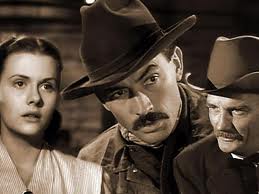
The film closes with Peggy Walsh attending Jimmy Ringo’s funeral, making her way through the crowd around the church door with her son to reveal, quietly but with pride, what the townsfolk have never known – that she is Mrs Jimmy Ringo. Thus, despite his death, the gunfighter finally achieves what he sought in coming to the town – his wife’s forgiveness and reconciliation.
W GF 3

Nice work by a peak Peck, Malden, and a game ensemble of mostly “B” players. Solid direction here by Henry King, and dark lensing by Arthur C Miller. The screenplay is credited to William Bowers, but word has it that a major rewrite was done by Nunnally Johnson, who also Produced. Good score by Alfred Newman. This is a small, dark, unpretentious Western that never tries to over-reach, and stays on-target throughout.

http://www.youtube.com/watch?v=3z6Obp0rcuo


HIGH NOON    1952    Fred Zinnemann

(Four Oscars)

 W HN poster

Now considered one of the great American Westerns, High Noon received some frosty reactions when it opened in 1952.

Upon its release, the film was criticized by audiences, as it did not contain such expected Western archetypes as chases, violence, action, and picture postcard scenery. Rather, it presented emotional and moralistic dialogue throughout most of the film. Only in the last few minutes were there any action scenes.

In the Soviet Union the film was criticized as “a glorification of the individual.” The American Left appreciated the film for what they believed was an allegory of people (Hollywood people, in particular) who were afraid to stand up to HUAC. However, the film eventually gained the respect of people with conservative/anti-communist views. Ronald Reagan, a conservative and fervent anti-Communist, said he appreciated the film because the main character had a
W HN 1

strong dedication to duty, law, and the well-being of the town despite the refusal of the townspeople to help. Dwight Eisenhower loved the film and frequently screened it in the White House, as did many other American presidents.  Bill Clinton cited High Noon as his favorite film and screened it a record 17 times at the White House.

Actor John Wayne disliked the film because he felt it was an allegory for blacklisting, which he actively supported. In his Playboy interview from May 1971, Wayne stated he considered High Noon “the most un-American thing I’ve ever seen in my whole life” and went on to say he would never regret having helped blacklist liberal screenwriter Carl Foreman from Hollywood.

W HN 2

Ironically, Gary Cooper himself had conservative political views and was a “friendly witness” before HUAC several years earlier, although he did not name names and later strongly opposed blacklisting. Wayne accepted Cooper’s Academy Award for the role as Cooper was unable to attend the presentation.

In 1959, Wayne teamed up with director Howard Hawks to make Rio Bravo, as a conservative response. Hawks explained, “I made Rio Bravo because I didn’t like High Noon. Neither did Duke. I didn’t think a good town marshal was going to run around town like a

W HN 8

chicken with his head cut off asking everyone to help. And who saves him? His Quaker wife. That isn’t my idea of a good Western.”

Irritated by Hawks’s criticisms, director Fred Zinnemann responded, “I admire Hawks very much. I only wish he’d leave my films alone!” Zinnemann later said in a 1973 interview, “I’m told that Howard Hawks has said on various occasions that he made Rio Bravo as a kind of answer to High Noon, because he didn’t believe that a good sheriff would go running around town asking for other people’s help to do his job. I’m rather surprised at this kind of thinking. Sheriffs are people and no two people are alike. The story of High Noon takes place in the Old West but it is really a story about a man’s conflict of conscience. In this sense it is a cousin to A Man for All Seasons. In any event, respect for the Western Hero has not been diminished by High Noon.”

W HN

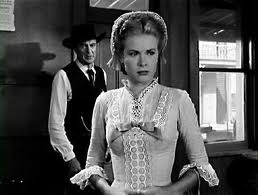
I included so much background because it’s so surprising. Back to the movie. It’s said the there’s no such thing as an honest man. Will Kane (Gary Cooper) proves otherwise. Kane, the longtime marshal of Hadleyville, New Mexico Territory, has just married pacifist Quaker Amy Fowler (Grace Kelly) and turned in his badge. He intends to become a storekeeper elsewhere. Suddenly, the town learns that Frank Miller (Ian MacDonald)—a criminal Kane brought to justice—is due to arrive on the noon train.

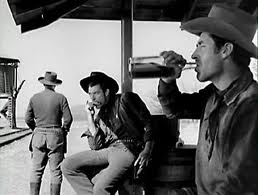
Miller had been sentenced to hang but was pardoned on an unspecified legal technicality. In court, he had vowed to get revenge on Kane and anyone else who got in the way. Miller’s three gang members – his younger brother Ben (Sheb Wooley), Jack Colby (Lee Van Cleef) and Pierce (Robert J. Wilke) wait for him at the station.
W HN 6

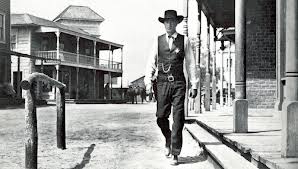
Kane and his wife leave town, but fearing that the gang will hunt him down and be a danger to the townspeople, Kane turns back. He reclaims his badge and scours the town for help, even interrupting Sunday church services, with little success. His deputy, Harvey Pell (Lloyd Bridges), resigns because Kane did not recommend him as the new marshal.

Kane goes to warn old flame Helen Ramírez (Katy Jurado), first Frank Miller’s lover, then Kane’s, and now Harvey’s. This girl gets around. Aware of what Miller will do to her if he finds her, she quickly sells her business and prepares to leave town.

Amy gives her husband an ultimatum: she is leaving on the noon train, with or without him.
W HN 4

The worried townspeople encourage Kane to leave, hoping that would defuse the situation. Even Kane’s good friends the Fullers are at odds about how to deal with the situation. Mildred Fuller (Eve McVeagh) wants her husband, Sam (Harry Morgan) to speak with Kane when he comes to their home, but he makes her claim he is not home.

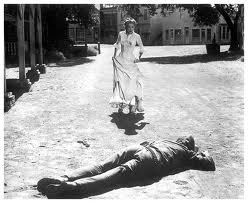
In the end, Kane faces the Miller Gang alone. Kane guns down two of the gang, though he himself is wounded in the process. Helen Ramírez and Amy both board the train, but Amy gets off when she hears the sound of gunfire. Amy chooses her husband’s life over her religious beliefs, shooting Pierce from behind. Frank then takes her hostage to force Kane into the open. However, Amy suddenly attacks Frank, giving Kane a clear shot, and Kane shoots Frank Miller dead. As the townspeople emerge, Kane contemptuously throws his marshal’s star in the dirt and leaves town with his wife.

W HN 5

No Western had ever come close to this kind of gripping drama, and the term “Adult Western” was coined to describe it. Brilliantly piloted by Zinnemann’s steady hand, the tension builds relentlessly until the Quaker bride shoots the last bad guy. Cooper is steadfast and perfect, Kelly is trim and convincing, and Katy Jurado shines as the busiest girl in town. Crisp black and white lensing by Floyd Crosby, and brilliant editing by Elmo Williams and Harry Gerstad, relentlessly keeping the clock ticking as the whole town waits for the Noon Train. A memorable music score by Dimitri Tiomkin. One of the real champs.
W HN 7


http://www.youtube.com/watch?v=SkNu4-sSglY


THE OUTLAW JOSEY WALES    1976    Clint Eastwood
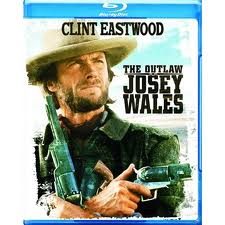
W O poster 

I know I’ll take some flak for including this, but I love this movie, and every ridiculous character in it.  

Josey Wales, a Missouri farmer, is driven to revenge by the murder of his wife and son by a band of pro-Union Jayhawkers—Senator James H. Lane’s Redlegs from Kansas.

Wales joins a group of pro-Confederate Missouri Bushwhackers led by William T. Anderson. At the conclusion of the war, Captain Fletcher persuades the guerrillas to surrender, saying they have been granted amnesty. Wales refuses to surrender. As a result, he and one young man are the only survivors when Captain Terrill’s Redlegs massacre the surrendering men. Wales intervenes and guns down several Redlegs with a Gatling gun.

W O 5

Senator Lane puts a $5,000 bounty on Wales, who is now on the run from Union militia and bounty hunters. Along the way, despite wishing to be left alone, he accumulates a diverse group of companions. They include an old Cherokee named Lone Watie, a young Navajo woman, and an elderly woman from Kansas and her granddaughter whom Wales rescued from Comancheros. And a mangy hound who Wales spits his tobacco on.
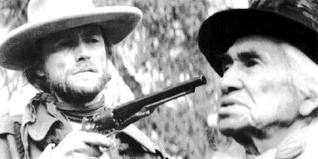
W O

In Texas, Wales and his companions are cornered in a ranch house which is fortified to withstand Indian raids. The Redlegs attack but are gunned down by the defenders. Wales, despite being out of ammunition, pursues the fleeing Captain Terrill on horseback. When he catches him, Wales dry fires his pistols through all twenty–four empty chambers before stabbing Terrill with his own cavalry sword.
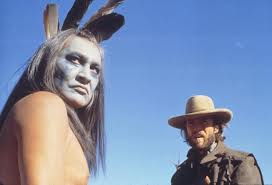
W O 2

At the bar in nearby Santa Rio, a wounded Wales finds Fletcher with two Texas Rangers. The locals at the bar, who refer to Wales as “Mr. Wilson,” tell the Rangers that Wales was killed in a shoot-out in Monterrey, Mexico. The Rangers accept this story and move on. Fletcher refuses to believe that Wales is dead. He says that he will go to Mexico and look for Wales himself. Seeing the blood dripping on Wales’s boot, Fletcher says that he will give Wales the first move, because he “owes him that.” Wales rides off, hopefully to rejoin his odd collection of companions who have set up housekeeping at the old lady’s late son’s Rancho.
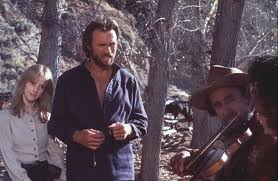
W O 7

This is typical, sentimental story telling from Eastwood, who, along with John Ford, gets two titles on this list. Without his knowledge or consent, and gradually throughout his journey, Josey’s murdered family is replaced the odd collection of characters who he saves from calamity along the way, and feels responsible for. Chief Dan George plays the old Cherokee, and delivers too many hilarious, dead-pan lines to count.

Nice work by director Eastwood, with solid cinematography by Bruce Surtees, and editing by Ferris Webster. Nice job by all.

W O 8 

http://www.youtube.com/watch?v=en9rfsUGDkc


RED RIVER    1948    Howard Hawks

W RR poster 

As American as it gets. Hawks’ memorable tapestry of the blazing of the Chisholm Trail. The cattle were in Texas, but the Rail Head was in Abilene Kansas. And driving a huge and ornery herd of cattle, for the very first time, across the Red River, over mountain ranges, through hostile Indian territory, risking misadventure with nature and bands of rustlers, was no easy business.

W RR

Hawks, probably Hollywood’s best dialogue director, made John Wayne almost believable. Lots of crusty, spicy cowpoke dialogue that might be corny in the hands of another director, but Hawks pulls it off.

One memorable scene has John Ireland and Montgomery Clift admiring each other’s six shooters in great detail. Say’s Ireland, “The only thing as beautiful as a good gun is a Swiss Watch, or a

W RR 6

woman from anywhere. You ever have a Swiss watch?” Of course, Hawks was having some fun with guns as penis parody material, which gets funnier with each viewing.

It’s dawn on the range, and the men and the cattle are ready. Hawks’ camera does a slow, minute-long, 360 pan across the faces of cowboy after cowboy, beginning and ending on Wayne, who looks to Montgomery Clift and finally say’s, “Take ‘em to Missouri, Matt”. Clift raises his hat and whoops the first of many,

W RR 8

And the next cowboy does the same, and in quick cuts now, face after face, whoop after whoop, until, finally driven by the drama of the moment, the music swells, and the herd begins to move. It’s one of the great moments in movie history and, if you haven’t experienced it – shame on you. 

 W RR 4

http://www.tcm.com/mediaroom/index.jsp?cid=12520


http://movieclips.com/S47B-red-river-movie-showdown/


THE SEARCHERS    1956    John Ford
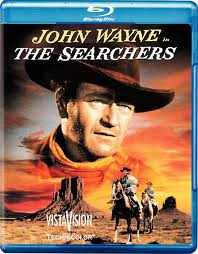
W Search poster 

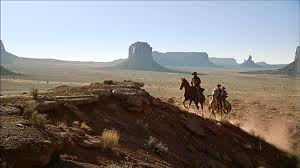
Directed by John Ford, based on the 1954 novel by Alan Le May, and set during the Texas–Indian Wars, the film stars John Wayne (who else) as a middle-aged Civil War veteran who spends years looking for his abducted (by Comanches no less) niece played by Natalie Wood, along with Jeffrey Hunter as his adoptive nephew, who accompanies him on the search.

W Search

In 1868, Ethan Edwards (Wayne) returns from the American Civil War, in which he fought for the Confederacy, to the home of his brother Aaron (Walter Coy) in the wilderness of west Texas. Wrongdoing or legal trouble in Ethan’s past is suggested by his three-year absence, a large quantity of gold coins in his possession, a Mexican revolutionary war medal that he gives to his young niece Debbie (played as a child by Natalie Wood’s sister Lana Wood), and his refusal to take an oath of allegiance to the Texas Rangers, as well as Rev. Samuel Clayton mentioning that Ethan “fits a lot of descriptions”.

W Search 1

Shortly after Ethan’s arrival, cattle belonging to his neighbor Lars Jorgensen (John Qualen) are stolen, and when Captain Samuel Clayton (Ward Bond) leads Ethan and a group of Rangers to follow the trail, they discover that the theft was a ploy by Comanche to draw the men away from their families. When they return home, they find the Edwards homestead in flames; Aaron, his wife Martha (Dorothy Jordan), and their son Ben (Robert Lyden) dead; and Debbie and her older sister Lucy (Pippa Scott) abducted.
W Search 3

After a brief funeral, the men return to pursuing the Comanches. When they find their camp, Ethan recommends an open attack, in which the girls would be killed, but Clayton insists on sneaking in. The Rangers find the camp deserted, and when they continue their pursuit, the Indians almost catch them in a trap. The Rangers fend off the Indian attack, but with too few men to ensure victory, Clayton and the posse return home, leaving Ethan to continue his search for the girls with Lucy’s fiancé Brad Jorgensen (Harry Carey) and Debbie’s adopted brother Martin Pawley (Jeffrey Hunter). However, after Ethan finds Lucy brutally murdered and presumably raped in a canyon near the Comanche camp, Brad becomes enraged, rides wildly into the camp, and is killed.
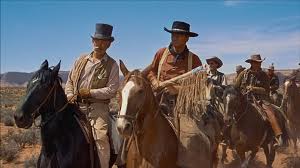
W Search 4

Ethan and Martin search until winter, when they lose the trail. When they return to the Jorgensen ranch, Martin is enthusiastically welcomed by the Jorgensens’ daughter Laurie (Vera Miles), and Ethan finds a letter waiting for him from a man named Futterman, who has information about Debbie. Ethan, who would rather travel alone, leaves without Martin the next morning, but Laurie provides Martin with a horse to catch up. At Futterman’s (Peter Mamakos) trading post, Ethan and Martin learn that Debbie has been taken by Scar (Henry Brandon), the chief of the Nawyecka band of Comanches. A year or more later, Laurie receives a letter from Martin describing the ongoing search. In reading the letter aloud, Laurie narrates the next few scenes, in which Ethan kills Futterman for trying to steal his money, Martin accidentally buys a Comanche wife, and the two men find part of Scar’s tribe killed by soldiers.

W Search 8

After looking for Debbie at a military fort, Ethan and Martin go to New Mexico, where a Mexican man leads them to Scar. They find Debbie, now an adolescent (Natalie Wood), living as one of Scar’s wives. When she meets with the men outside the camp, she says she has become a Comanche and asks them to leave without her. However, Ethan would rather see her dead than living as an Indian. He tries to shoot her, but Martin shields her with his body and a Comanche shoots Ethan with an arrow. Ethan and Martin escape to safety, where Martin saves Ethan by tending to his wound. Martin is furious at Ethan for attempting to kill Debbie and wishes him dead. “That’ll be the day,” Ethan replies. The men then return home.

W Search 5

Meanwhile, Charlie McCorry (Ken Curtis) has been courting Laurie in Martin’s absence. Ethan and Martin arrive home just as Charlie and Laurie’s wedding is about to begin. After a fistfight between Martin and Charlie, a nervous “Yankee” soldier, Lt. Greenhill (Patrick Wayne), arrives with news that Ethan’s half-crazy friend Mose Harper (Hank Worden) knows where Scar is. Clayton leads his men to the Comanche camp, this time for a direct attack, but Martin is allowed to sneak in and rescue Debbie, who welcomes him. During the attack, Martin kills Scar and Ethan scalps him.
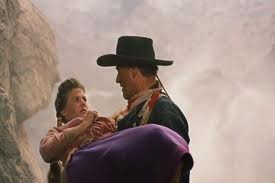
W Search 7

When Ethan sees Debbie, Martin is unable to stop him from chasing her, but instead of killing her, Ethan carries her home. Once Debbie is safely with her family, and Martin is reunited with Laurie, Ethan walks away, alone, the cabin door closing on his receding image in one of the most famous and iconic closing scenes in film history.

Quite a yarn, nicely piloted by Ford, with beautiful cinematography by Winton Hoch. Ford’s Favorite location, Monument Valley, never looked better. Wayne seems comfortable with this kind of suds, and obviously works well with Ford. Jeffrey Hunter, Vera Miles, Ward Bond, and Natalie Wood round out the cast.

A busy Western about guilt and vengeance. Very nice indeed.


http://www.youtube.com/watch?v=Yr7KzwRV2qM


SHANE    1953    George Stevens

W Shane poster 

I saw this as a child, in the Edwards Theater in East Hampton, which was the venue that provided so many of my early movie experiences. I can still remember young Brandon deWilde’s voice echoing across the valley, calling to Shane to come back, as Alan Ladd rides off into a perfect movie ending. Great stuff. Great movie.

Two themes here that reoccur in movie westerns, over and over; you just can’t escape who you are, and sometimes a man just stands up. And more often than not, both cost you what you want most. This is a simple story about good and evil, and right and wrong, and doing what’s needed, no matter the cost. A simple story delicately handled by director George Stevens, with a game cast of heroes and villains. It’s the old story of the hard working homesteaders, trying to make a go of it against all odds, and against the will of the greedy land barons, who want to keep the range open and free of the fences these pesky farmers keep putting up everywhere. Just how far will the land Barons go to squeeze the homesteaders off their land? Assault? Arson? Murder? There’s no end to it. These are simple farmers, unable or unwilling to fight back. They need help. They need a hero. Into this sordid atmosphere, a quiet man appears, riding into town wearing buckskin, looking for work. His name is Shane.
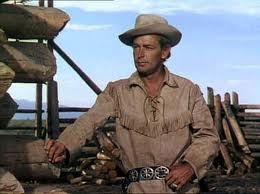
W Shane

The location is an isolated valley in the sparsely settled territory of Wyoming. Whatever his past, Shane soon finds himself drawn into a conflict between homesteader Joe Starrett (Van Heflin) and ruthless cattle baron Rufus Ryker (Emile Meyer), who wants to force Starrett and the others off the land.

Shane stays for supper and the night at the invitation of Joe’s wife, Marian (Jean Arthur), and starts working as a farmhand. Young Joey (Brandon deWilde) is drawn to him and the gun, and wants to learn how to shoot. Shane tries to teach him and his mother that a gun is a tool like any other, except it’s designed to shoot people. Whether it’s used for good or not depends on the person using it.

W Shane 9

There is an obvious attraction, and perhaps a history, between Shane and Marian. She tells Shane that they would be better off if there weren’t any guns in the valley, including his. She is emphatic that guns are not going to be a part of her son’s life.

When Shane goes into town with Starrett and the rest of the homesteaders, he gets into a fistfight with Ryker’s men after being ridiculed for backing down before. With Joe’s help, they win, and the shopkeeper orders them out. Ryker declares that the next time Shane or Joe go to town the “air will be filled with gunsmoke.”

W Shane 4

As tensions mount, Ryker hires Jack Wilson (Jack Palance), an unscrupulous, psychopathic gunslinger, who laughs at the thought of murder. Wilson goads ex-Confederate Frank ‘Stonewall’ Torrey (Elisha Cook, Jr.), a hot-tempered Alabama homesteader, into a fight, and shoots him down in the street.

After the funeral, many plan to leave. But a fire set by Ryker’s men spurs them into pulling together to put it out, rather than driving them out.

Ryker decides to have Wilson kill Starrett in an ambush at the saloon, under the pretense of negotiating. One of Ryker’s men loses his stomach for this, and warns Shane that Starrett’s “up against a stacked deck.”

Joe is resolved to go anyway. He knows that Shane will look after Marian and Joey if he doesn’t survive. But Shane tells Joe he’s no match for Wilson, although he might be a match for Ryker. They fight and Shane has to knock him unconscious. Joey yells at Shane for pistol whipping his father with the butt of his gun.
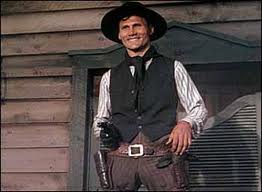
W Shane 8

Marian begs Shane not to go and asks if he is doing it for her. He admits that he is, and for Joey, and all the decent people who want a chance to live and grow up there.

In town, Shane walks into the saloon. Shane tells Ryker that they’re both relics of the Old West, but Ryker hasn’t realized it yet. Wilson draws, but is shot and keeps reflexively shooting, even after he’s dead – only Jack Palance can get away with stuff like this. Ryker pulls a hidden gun and Shane returns fire. He’s turned to leave when Ryker’s brother fires a Winchester rifle from the balcony overhead. Joey, who ran after Shane, calls out and Shane fires back.

Shane walks out of the saloon, where Joey is waiting for him. He says that he has to move on and tells him to take care of his family. Shane also says to tell Joey’s mother that there “aren’t any more guns in the valley.”
W Shane 6

Shane’s blood runs onto Joey’s hands when he reaches up to him. Joey’s worried, but Shane tells him that’s fine. Wounded, Shane sits up, with his arm hanging uselessly at his side as he rides past the grave markers on Cemetery Hill, and out of town, into the sunrise, over the mountains.

Whether Shane has been mortally wounded, as is often speculated, is apparent in neither the film nor in Schaefer’s novel.
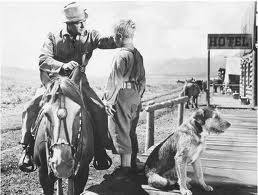
W Shane 5

Best scene: Stevens needed a gimmick, a piece of stagecraft to set up the entrance of Wilson, the gunfighter hired by Ryker to harass the homesteaders. Wilson is played by Jack Palance, billed in the credits as Walter Palance, in his first important role. Stevens wanted the audience to understand that the man who was about to come through the swinging doors of the Saloon, was evil incarnate, before they ever saw him. In the background is the
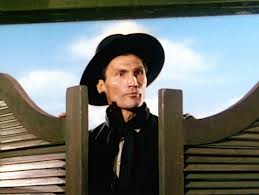
W Shane 2

doorway to the saloon, not yet open, with a man’s legs and boots visible behind the swinging doors. Stevens sticks a sleeping dog in the foreground. As the saloon door opens, the dog awakens, whimpers, and crawls out of frame. One of the best evil entrances ever staged.

A simple story – beautifully told.

 W Shane 10

http://www.youtube.com/watch?v=zdd07SDHv5Q


SILVERADO    1985    Lawrence Kasdan
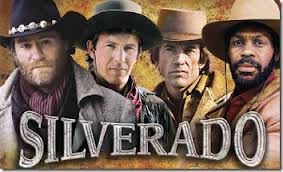
W Sil poster 

Something you need to know. Two years before Silverado, Larry Kasdan made The Big Chill, which did impressive box office, and was loved by just about everyone I knew. And I hated it. I thought it was an endless, pretentious, post mortem gab fest, although I loved
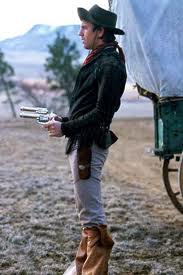
W Sil 9

the house, and the music, and fell totally in love with a delicious young Glenn Close. Anyway, The Big Chill was supposed to be a great opportunity for a young unknown actor named Kevin Costner to show his stuff. Unfortunately for Costner, the picture was re-edited leaving his entire performance on the editing room floor.

W Sil 4

He’s the dead guy in the coffin, who everyone’s talking about. Kasdan liked Costner, and felt badly about what had happened, so he kept an eye out for a likely vehicle to put Costner’s talents to good use. While working, two years later, on the script for Siverado, Kasdan expanded the role he wrote for Costner, to make up for poor Kevin getting stuck in that coffin. Just so you know.

Emmett (Scott Glenn) is ambushed by three men while he sleeps in a deserted shack. In a brief gunfight, he kills all of the assailants. As he travels to Silverado, Emmett finds a man, Paden (Kevin Kline), lying in the desert, having been robbed and left to die.

W Sil 1

Emmett and Paden ride to the town of Turley to meet Emmett’s brother, Jake (Kevin Costner), who is locked up and awaiting hanging for killing a man in self-defense. Paden is later jailed when he encounters and kills one of the men who robbed him. Emmett aids Jake and Paden in a breakout with the help of Mal (Danny Glover), a black cowboy who was run out of town by sheriff John Langston (John Cleese).
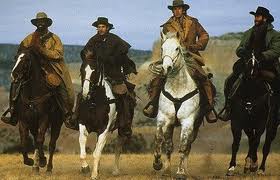
W Sil 3

After helping a wagon train of settlers recover their stolen money from thieves, and leading them to Silverado, the group disbands to find their relatives and settle into the town. Emmett and Jake learn from their sister’s husband, the land agent for the area, that rancher Ethan McKendrick (Ray Baker) is attempting to maintain the open range, which he will dominate with his enormous herds of cattle, by driving all lawful claimants off the land. Emmett had
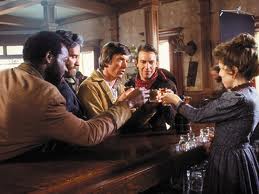
W Sil 2

killed McKendrick’s father years earlier in a gunfight, and McKendrick had hired the men who attempted to kill Emmett upon his release from prison. Mal finds his father Ezra (Joe Seneca), left destitute after his home had been burned down and his land overrun by cattle.

It is soon revealed that the sheriff Cobb (Brian Dennehy), an old friend of Paden’s, is on McKendrick’s payroll. After McKendrick’s men murder Ezra, burn the land office, and kidnap Emmett’s nephew Augie (Thomas Wilson Brown); Paden, Mal, Emmett, and Jake determine to defy

W Sil 6

Cobb. The four stampede McKendrick’s cattle to provide cover for a raid on his ranch, in which most of the bandits are killed and the kidnapped boy is rescued. They then return to town, where in a series of encounters, each defeats his own personal enemy. In the last of these, Paden kills Cobb in a duel. Emmett and Jake leave for California, their long stated goal, while Mal and his sister reunite and decide to rebuild their father’s homestead. Paden stays in Silverado as the new sheriff.

This is rollicking, knee slapping good fun from beginning to end. Nicely piloted by Kasdan, who also wrote the screenplay with his brother Mark. Tasty tangy dialogue delivered by a game cast, but it’s little Linda Hunt who steels the show as the tidy little saloon keeper who rather fancies Kevin Kline. A robust musical score from Bruce Broughton, whose work I’m unfamiliar with. Good work by all. Great fun.
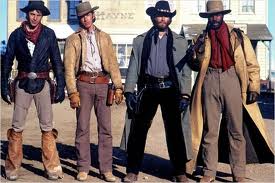
 W Sil 7

http://www.youtube.com/watch?v=VACFLuni49c


STAGECOACH    1939    John Ford

 W St poster

In 1939, John Ford (who else) would finally make a Western for grown ups, and movies would never be the same again. Rumor has it that Orson Welles screened Stagecoach over twenty times with DP Greg Toland, during pre production for Citizen Kane. Room Ceilings had been included in Stagecoach by Ford and DP Bert Glennon, and Welles was so impressed that he reworked the cinematic design for Citizen Kane.

John Ford’s first talking Western – and talk they do, starring Claire Trevor and John Wayne in his break-through role. The screenplay, written by Dudley Nichols and Ben Hecht, is an adaptation of “The Stage to Lordsburg”, a 1937 short story by Ernest Haycox. The film follows a group of strangers riding on a stagecoach through dangerous Apache territory.
W St 3

Although Ford had made many Westerns in the silent film era, he had never previously directed a sound Western. Between 1929 and 1939, he directed films in almost every other genre, including Wee Willie Winkie , starring Shirley Temple, and The Informer, starring Victor McLaghlen.  Stagecoach was the first of many Westerns that Ford shot using Monument Valley, in the American south-west on the Arizona–Utah border, as a location, many of which also starred John Wayne. In Stagecoach the director skillfully blended shots of Monument Valley with shots filmed at Iverson Movie Ranch in Chatsworth, California, and other locations.
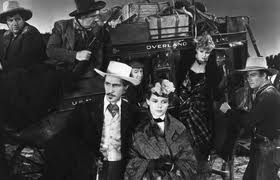
W St 6

In 1880, a motley group of strangers boards the east-bound stagecoach from Tonto, Arizona Territory to Lordsburg, New Mexico Territory. Among them are Dallas (Claire Trevor), a prostitute who is being driven out of town by the members of the “Law and Order League”; an alcoholic doctor, Doc Boone (Thomas Mitchell); pregnant Lucy Mallory (Louise Platt), who is traveling to see her cavalry officer husband; and whiskey salesman Samuel Peacock (Donald Meek).

W St 2

When the stage driver, Buck (Andy Devine), looks for his normal shotgun guard, Marshal Curly Wilcox (George Bancroft) tells him that the guard has gone searching for fugitive the Ringo Kid (John Wayne). Buck tells Marshal Wilcox that Luke Plummer (Tom Tyler) is in Lordsburg. Knowing that Kid has vowed to avenge the deaths of his father and brother at Plummer’s hands, the marshal decides to ride along as guard.

As they set out, U.S. cavalry Lieutenant Blanchard (Tim Holt) informs the group that Geronimo and his Apaches are on the warpath and his small troop will provide an escort until they reach Dry Fork. Gambler and Southern gentleman Hatfield (John Carradine) joins them and at the edge of town, the stage is flagged down by banker Henry Gatewood, (Berton Churchill), who is absconding with $50,000 embezzled from his bank.
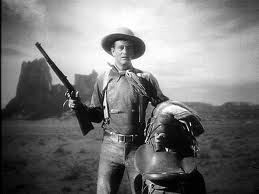
W St

Along the way, they come across the Ringo Kid, whose horse became lame and left him afoot. Even though they are friends, Curly has no choice but to take Ringo into custody. As the trip progresses, Ringo takes a strong liking to Dallas.

When Doc Boone tells Peacock that he served as a doctor in the Union Army during the “War of the Rebellion,” Hatfield quickly uses a Southern term, the “War for Southern Independence.” Later, Mrs. Mallory asks Hatfield whether he was ever in Virginia; he tells her he served in the Confederate Army under her father’s command.

W St 4

When the stage reaches Dry Fork, the group is informed that the expected cavalry detachment has gone to Apache Wells. Buck wants to turn back, but Curly demands that the group vote. With only Buck and Peacock objecting, they proceed to Apache Wells. There, Mrs. Mallory faints and goes into labor when she hears that her husband had been wounded in battle. Doc Boone is called upon to assist the delivery, and later Dallas emerges holding a healthy baby. Later that night, Ringo asks Dallas to marry him. She does not give him an immediate answer, afraid to reveal her checkered past, but the next morning, she agrees if he promises to give up his plan to fight the Plummers. Encouraged by Dallas, Ringo escapes but returns when he sees signs of a possible Indian attack.
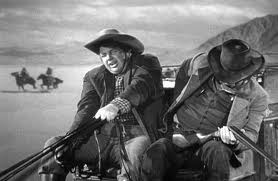
W St 10

When the stage reaches Lee’s Ferry, the passengers find the station and ferry burned, and those who were not killed have fled. They tie large logs to the sides of the stagecoach and float it across the river. Just when they think that danger has passed, they are set upon by a band of Apaches. Curly releases Ringo from his handcuffs to help repel the attack. During a long chase, when things look bleak, Hatfield is about to use his last bullet to save Mrs. Mallory from being taken alive when he is fatally wounded. Just then, the 6th U.S. cavalry arrives to the rescue of the group.
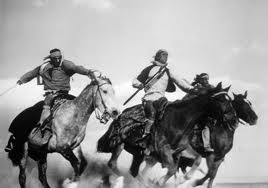
W St 9

When the stage finally arrives in Lordsburg, Gatewood is arrested by the local sheriff, and Mrs. Mallory is told that her husband’s wound is not serious. Dallas begs Ringo not to seek vengeance against the Plummers, but he is determined to settle matters. Curly grants him leave and his gun. In the ensuing shootout, Ringo dispatches Luke and his two brothers, then returns to Curly, expecting to return to jail. He asks the lawman to take Dallas to his ranch. However, when Ringo boards a wagon and says goodbye, Curly invites Dallas to ride to the edge of town. As she climbs aboard, and Curly and Doc laugh and start the horses moving, letting Ringo “escape” with Dallas.

W St 7

Stagecoach is the granddaddy of the modern Western Film genre. The yardstick by which all others are measured. After Stagecoach, movies would never look the same. Ford had invented a whole new kind of movie, which would be endlessly imitated throughout the post-Stagecoach era of modern motion pictures.
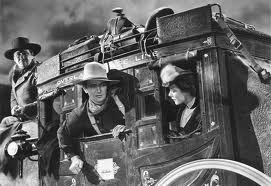
 W St 1 

http://www.youtube.com/watch?v=NBuPI4m4pO8


UNFORGIVEN    1992 Clint Eastwood

(Four Oscars)
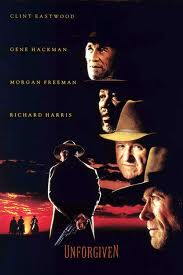
W U poster 

If you’re looking for a good guy to root for, you’ve come to the wrong movie. Unforgiven has none.

Produced and directed by Clint Eastwood with a screenplay written by David Webb Peoples, the film tells the story of William Munny, an aging outlaw and killer who takes on one more job years after he had hung up his guns and turned to farming. A dark, dark Western that deals frankly with the uglier aspects of violence and the myth of the Old West, it stars Eastwood in the lead role, with Gene Hackman, Morgan Freeman, and Richard Harris.
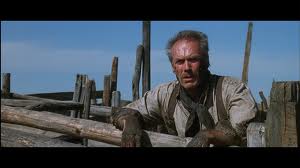
W U 4

Eastwood dedicated the movie to deceased directors and mentors Don Siegel and Sergio Leone. The film won four Academy Awards, including Best Picture, Best Director, Best Actor in a Supporting Role (Hackman), and Best Film Editing. Eastwood himself was nominated for the Academy Award for Best Actor for his performance, but he lost to Al Pacino for Scent of a Woman. In 2004, Unforgiven was added to the United States National Film Registry as being deemed “culturally, historically, or aesthetically significant”.

The film was only the third western to win the Oscar for Best Picture following Cimarron (1931) and Dances With Wolves (1990).

W U

A group of prostitutes in Big Whiskey, Wyoming, led by Strawberry Alice (Fisher), offers a $1,000 reward to whomever can kill Quick Mike (Mucci) and “Davey-Boy” Bunting (Campbell), two cowboys who disfigured Delilah Fitzgerald (Levine), one of their own. This upsets the local sheriff, Little Bill Daggett (Hackman), a former gunfighter and now an obsessive keeper of the peace who does not allow guns or criminals in his town. Little Bill had given the two men leniency, despite their crime.

Miles away in Kansas, the Schofield Kid (Woolvett), a boastful young man, visits the pig farm of William Munny (Eastwood), seeking to recruit him to kill the cowboys. In his youth, Munny was a bandit who was notorious for being a vicious, cold-blooded murderer, but he is now a repentant widower raising two children and has sworn off alcohol. Though Munny initially refuses to help with the
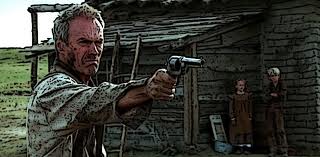
W U 9

assassination, his farm is failing, putting his children’s future in jeopardy. Munny reconsiders a few days later and sets off to catch up with the Kid. On his way, Munny recruits Ned Logan (Freeman), another retired gunfighter who reluctantly leaves his wife (Cardinal) to go along.

W U 10

Back in Wyoming, gunfighter English Bob (Harris) and his biographer, W. W. Beauchamp (Rubinek), arrive in Big Whiskey, also seeking the reward. Little Bill and his deputies disarm Bob, and Bill beats him savagely, hoping to set an example for other would-be assassins. The next morning Bob is ejected from town, but Beauchamp decides to stay and write about Bill, who has impressed him with his tales of old gunfights and seeming knowledge of the inner workings of a gunfighter’s psyche.

Munny, Logan and the Kid arrive later amid a rain storm and go to the saloon/whorehouse to discover the cowboys’ location. Munny has a bad fever after riding in the rain, and is sitting alone in the saloon when Little Bill and his deputies arrive to confront him. Little Bill has no idea who Munny is, and after finding a pistol on him he beats him brutally and kicks him out onto the street. Logan and the Kid, upstairs getting “advances” on their payment from the prostitutes, escape out a back window. The three regroup at a barn outside of town, where they nurse Munny back to health.

W U 6

Three days later, they ambush a group of cowboys and kill Bunting – although it becomes apparent that Logan and Munny no longer have much stomach for murder. Logan decides to return home while Munny and the Kid head to the cowboys’ ranch, where the Kid ambushes Quick Mike in an outhouse and kills him. After they escape, a very distraught Kid confesses he had never killed anyone before, and renounces the gunfighter lifestyle. When Little Sue (Frederick) meets the two men to give them the reward, they learn that Logan was captured by Little Bill’s men and tortured to death, but not before giving up the identities of his two accomplices. The Kid heads back to Kansas to deliver the reward money to Munny and Logan’s families, while Munny drinks half a bottle of whisky and heads into town to take revenge on Bill.

That night, Logan’s corpse is displayed in a coffin outside the saloon. Inside, Little Bill has assembled a posse to pursue Munny and the Kid. Munny walks in alone and promptly demands to know whom is the owner of the establishment brandishing a double-barrel shotgun. Skinny Dubois (James), the saloon owner and pimp steps forward in an attempt to dissuade Munny, who in response guns him down, stating in response to a comment from Bill “Well he shoulda armed himself if he was gonna decorate his saloon with my friend”. After some tense dialogue, a gunfight ensues, leaving Bill wounded and apparently dead and several of his deputies dead. Munny orders everyone out before a moment later stopping Little Bill from trying to shoot him in the back with his drawn pistol. Bill complains about not deserving to die and curses Munny saying he’ll see him in hell. Munny says “Deserves got nothing to do with it…” and with a simple Yea’ Munny finishes him with a final rifle-shot to the head. Munny then threatens the townsfolk in the rain before finally leaving town, warning that he will return if Logan is not buried properly or if any prostitutes are further harmed. If he finds out that someone has, he will return and kill them, their entire family and friends. Then rides off into the rain to go back home to his children.

W U 1

Eastwood attempts here to make his character more appealing by having him ride a mangy old horse that repeatedly dumps him. It almost works. This is a dark, almost sacrilegious descent into the sleazy underbelly of Western Movie culture, and it’s delicious. Steady direction by Eastwood and a cast that seems to be swapping
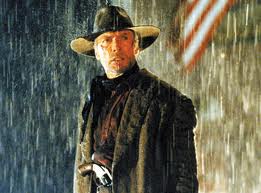
W U 7

bad guy one-upsmanship throughout the film. The tired old killers, game for a comeback (Eastwood and Freeman). English Bob, the sadistic British gunslinger (Harris). The corrupt Sheriff, Little Bill (Hackman). English Bob’s biographer W. W. Beauchamp (Rubinek). The insecure Kid, out to get that first notch on his gun (Woolvett). Quick Mike and Davey Boy, two nasty drunken cowpokes who disfigure a Hooker with a knife when Quick Mike can’t get it up (Muuci and Campbell). Bad guys all, in the town of Big Whiskey. The only let up from nastiness is the Madam of the local Brothel, Strawberry Alice, and the disfigured prostitute with a heart of gold, Delilah, who offers “free ones” to cowboys she likes.
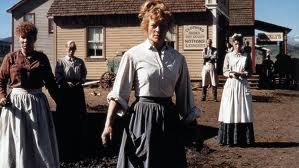
W U 5

Darkly and beautifully shot by Jack Green, a nice musical score by Lenny Niehaus, and crisp pacing by editor Joel Cox. Dark and unseemly doings in the town of Big Whiskey.

 W U 8

http://www.youtube.com/watch?v=bhWNbBzzOK0
 

W St 11

*

© 2013 Shaun Costello

Keep SHAUN COSTELLO’S BLOG up and running.
Creating and maintaining this BLOG is time
consuming. If you like what you’ve been reading,
please help me keep it going.
DONATE ANY AMOUNT Through PAYPAL at:


2012 in review

The WordPress.com stats helper monkeys prepared a 2012 annual report for this blog.

Here’s an excerpt:

600 people reached the top of Mt. Everest in 2012. This blog got about 10,000 views in 2012. If every person who reached the top of Mt. Everest viewed this blog, it would have taken 17 years to get that many views.

Click here to see the complete report.

Design a site like this with WordPress.com
Get started