Short stories and essays by Shaun Costello, as well as excerpts from manuscripts in progress.

Latest

I WISH I’D SAID THAT

I WISH I’D SAID THAT

By Shaun Costello

I’ve always envied those few whose witty weaponry enabled them to defuse an impossible moment with the turn of a phrase.

Sherwood Anderson when reviewing cowboy hero Tom Mix: “They say he rides as if he’s part of the horse, but they didn’t say which part.”

Dorothy Parker: “That woman speaks eighteen languages and can’t say ‘no’ in any of them.”

George S Kaufman: Once asked by a press agent, “How do I get my leading lady’s name into your newspaper?” Kaufman replied, “Shoot her.”

I wish I’d said that, but of course no one asked me. Of all the great verbal kick-turns I’ve read, my favorite happened at a Beverly Hills dinner party back in 1940.

Arthur Hornblow Jr. was one of Hollywood’s most successful producers. From 1933 to 1942 he had a hand in the production of some of Paramount’s biggest hits, before moving on to a stellar career at MGM, producing for luminaries like George Cukor and Billy Wilder. Hornblow’s fame as a producer was equaled however, by his legendary reputation as a party host. His dinner parties were storied events, and making his guest list meant you had “arrived” in the motion picture community.

The massive dining table was set according to the measurements and procedures followed by the staff of the Royal Family for state dinners at Windsor Castle. Each dinner guest was provided with their own personal

 servant, who stood at attention behind each chair awaiting the call to the most menial of tasks. The wines served were of the great vintages from the finest Chateau’s of Bordeaux and Burgundy. The guest list read like the who’s who of Hollywood Royalty: Clark Gable, Carole Lombard, Robert Taylor, Claire Trevor, Spencer Tracy, Kate Hepburn, Jimmy Stewart, Bing Crosby, Olivia DeHaviland, Bob Hope, Cary Grant. All dressed to the “Nines”. At their peak. Walking on air.

On this particular evening the name of Herman Mankiewicz had been added to the guest list. Manky, as he was universally known, was one of Hollywood’s mercurial talents, responsible for the screenplays for Citizen Kane, The Enchanted Cottage,

 Dinner at Eight, and many others. He was also one of Hollywood’s most notorious drunks, leaving a disgruntled and embarrassed list of dinner hosts in his wake. Arthur Hornblow Jr. had avoided inviting Manky to one of his extravaganzas, fearing bad behavior, and the possibility of an unfortunate incident. But Manky, whose barbed wit and scintillating conversation made him popular on Tinseltown’s party circuit, could not be put off forever. So on this particular evening a nervous Arthur Hornblow Jr. could do nothing more than hope for good behavior from his mercurial guest. He gave strict instructions to the staff to limit Manky’s wine service at dinner and to watch for signs of unusual behavior. That done, Hornblow continued fussing over details he felt necessary in order to present a fabulous evening to his fabulous guests.

The pre-dinner cocktail reception out on the terrace was accompanied by a string quartet, while Hollywood’s finest chattered amongst themselves, totally oblivious to possibility of the existence of anything unglamorous in or out of their own perfect little world. Manky held court with a raconteur’s glib concoction of facts and fables, and his audience loved every moment. Hornblow gazed at the assembly through the window and smiled.

The crystal bell tinkled the announcement of a dinner at the ready, and the guest list with the grace born of celebrity and assurance glided through the huge doorway into the dining chamber, the epicenter of Hornblow’s mansion.  Everyone found their appropriate places with Hornblow at the head of the enormous table, and his wife Myrna Loy sitting opposite. The wines were greeted with ooohs and ahhhs, and each course served was a tour de force in epicurean perfection. Arthur Hornblow Jr, surveyed his table with a sense of satisfaction thinking to himself. “Well Arthur, you’ve done it again. Everything is as it should be.”

Gone unnoticed amidst all this perfection was an unusually quiet Herman Mankiewicz. Although his wine flow had been curtailed at the dinner table, he had consumed seven or eight martinis during the pre dinner festivities and was plastered. He sat staring straight ahead, weaving ever so slightly to his left and then his right, then slightly forward and suddenly vomited into his soup.

What followed was the longest pause in the history of Tinseltown. No one moved. No one made eye contact with anyone else. Fifty dinner guests sat silent and motionless, perhaps hoping on the off chance, that God might appear and, in his benevolence somehow make things right. But God went unneeded on this particular evening. Manky, seemingly recovered  from his trance-like stupor looked down at the evidence of his mischief, then slowly lifted his head and turned in the direction of his horrified host and said, “Not to worry Arthur. The white wine came up with the fish.”

I wish I’d said that. I wish I’d been there. 

*

© 2006 Shaun Costello/New York Times Sunday Magazine


Keep SHAUN COSTELLO’S BLOG up and running.
Creating and maintaining this BLOG is time
consuming. If you like what you’ve been reading,
please help me keep it going.
DONATE ANY AMOUNT Through PAYPAL at:


TOADY TOBACK’S HASTY EXIT

I think Jimmy Toback sucks, and so should you.

By Shaun Costello


Every once in a great while, an opportunity presents itself to right a great wrong, to set the record straight, to win one for the Gipper. Permit me to give you an example of how I obnoxiously and joyfully behaved when I got the worst of all film directors accidentally in my cross hairs. Some time in 1983, I paid seven dollars to see, arguably, the worst film ever made. It was “Exposed”, starring Nastassia Kinsky (she of the snake pic) and Rudolph Nureyev (I’m not making this up). Anyway, about half way through this excruciatingly putrid film, and just before I walked out of the theater, Nureyev, who plays a violinist, approaches Nasty Kinsky from behind and, while fingering her face like frets on a fiddle, he begins to run his bow across her bare breasts, as she moans in ecstasy, “Oh yes, play me, play me”.

Well, that was just about my limit, and I swore to myself that if I ever ran across that talentless, gambling addicted, over-achiever Jimmy Toback, who directed this piece of drek, that vengeance would be mine.

OK, fast forward to about 1988. I’m sitting with a few friends watching a movie; I don’t remember which one, at the Ziegfeld Theater, which was then Manhattan’s best film venue. After the tail credits, the house lights come up and, as we’re putting on our coats, one of my friends say’s, “Hey, isn’t that Jimmy Toback?” It was one of those Marlon Brando diamond bullet in the forehead moments that come all too infrequently in a man’s life, but I was up to it. At just about the top of my lungs, I screamed across the crowded theater, “Hey Toback, I sat through half an hour of EXPOSED, and you owe me seven bucks, now pay up!” Toback, slime that he was (and I’m sure still is), bolted, running for one of the side doors of the theater, leaving behind the girl he was with. What a toad. Anyway, I’m sure everyone within earshot thought I was nuts, but I felt like a million bucks. Vengeance was finally mine, and the cowardly behavior of Toback just about made my year. The moral of this tale, if there is one, is the next time opportunity knocks – open the door.

http://www.youtube.com/watch?v=EHq6B_EMhks

 *

 © 2007 Shaun Costello


Keep SHAUN COSTELLO’S BLOG up and running.
Creating and maintaining this BLOG is time
consuming. If you like what you’ve been reading,
please help me keep it going.
DONATE ANY AMOUNT Through PAYPAL at:

HOLLYWOOD’S BEST

 Hollywood’s Best

The ten best American films I can think of that

  were produced by Hollywood’s studio system.


A moment here, to talk about criteria. My selection process was based on those films, whose existence depended on the creative conveyor belt of Hollywood’s film factories, that began with the Silents of the Twenties, and peaked with the well organized, and marvelous output of the Thirties and Forties. The major studios were run by hard nosed businessmen with names like Mayer, and Zanuck, and Warner, and Cohn; whose methods for getting a product to market varied little from their cousins back East, in New York’s Garment Center. Everyone who worked in movies back then was under contract; writers, directors, producers, scenic artists, technicians, and of course, movie stars. The production schedules were tight, and the objective was to get the maximum amount of product to the marketplace, with the minimum amount of time and cost. Scratch a Movie Mogul, and find a Garmento? Sure, why not – the system worked. And, every so often, the right elements fell into place, usually by happenstance, and resulted in memorable motion pictures. The appropriate writer for the script, the right actor for the part, a crew that knew its business, a savvy producer to crack a whip, and the right director, with the vision and stamina to see the project through. And the result was the everlasting language of movies, woven forever into the fabric of the American syllabus. Those lines that live forever: “Of all the gin joints, in all the world”………. “Pay no attention to that man behind the curtain”………..  “Take ‘em to Missouri, Matt”………. “Leave the gun. Take the cannoli’s”………… “I’m on toppa the world, Ma”………. “Frankly my dear, I don’t give a damn”………… “Badges? We don’ need no stinkin’ badges”……….“I coulda been a contender. I coulda been somebody”.  American films, produced through the Hollywood Studio System.


I struggled with this, and many of you will find fault with my choices but, for better or worse, here they are:


Red River   1948

Howard Hawks


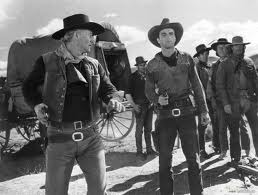
As American as it gets. Hawks’ memorable tapestry of the blazing of the Chisholm Trail. The cattle were in Texas, but the Rail Head was in Abilene Kansas. And driving a huge and ornery herd of cattle, for the very first time, across the Red River, over mountain ranges, through hostile Indian territory, risking misadventure with nature and bands of rustlers, was no easy business.

Hawks, probably Hollywood’s best dialogue director, made John Wayne almost believable. Lots of crusty, spicy cowpoke dialogue, that might be corny in the hands of another director, but Hawks pulls it off.

It’s dawn on the range, and the men and the cattle are ready. Hawks’ camera does a slow, minute-long, 360 pan across the faces of cowboy after cowboy, beginning and ending on Wayne, who looks to Montgomery Clift and finally say’s, “Take ‘em to Missouri, Matt”. Clift raises his hat and whoops the first of many, and the next cowboy does the same, and in quick cuts now, face after face, whoop after whoop, until, finally driven by the drama of the moment, the music swells, and the herd begins to move. It’s one of the great moments in movie history and, if you haven’t experienced it – shame on you. 

  http://movieclips.com/S47B-red-river-movie-showdown/


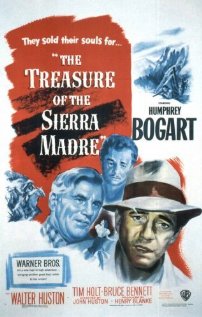
The Treasure of the Sierra Madre   1948

John Huston

(3 Oscars)

Greed and paranoia in the Mexican Mountains. Huston’s masterpiece, and an Oscar for his Dad. Huston wrote the part for his father, Walter, to play. What gold does to men’s lives. Howard (Houston) foretells of the possibilities of sudden wealth turning men against each other, but Dobbs (Bogart) say’s not him. He’d take only what he needed, and not a bit more. And of course, it’s Dobbs who turns rotten.

Absolutely perfect from beginning to end, and as good as movies get


http://www.youtube.com/watch?v=vGpvO8JabEc


The Best Years of Our Lives   1946

William Wyler

(7 Oscars)

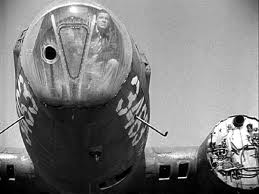
The War over, three men meet on the transport plane taking them home to Boone City. A middle-aged Army Sargeant (Fredric March), a decorated Flyboy (Dana Andrews), and a Sailor with hooks for hands (Harold Russell – a real-life vet amputee, who gives a startlingly believable performance). This film was shot in the time which it depicts, and the language, which might seem corny and dated now, is how people spoke back then. The right cast, particularly March and Myrna Loy, the right story, and a savvy director turn this into one of the real champs. Best moment: Dana Andrews in the bomber shell.


http://www.youtube.com/watch?v=h3EsNKlB7os


 On the Waterfront   1954

Elia Kazan


(8 Oscars)


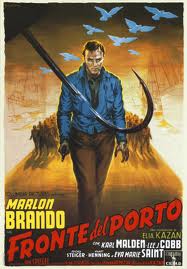
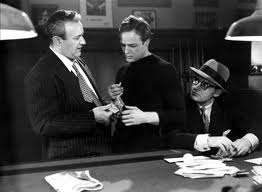
So, you have to ask yourself, “Were there really commies in Hollywood, after WWII, and what message were they sending?” Here, Director Elia Kazan, ever embittered by the McCarthy-driven witch hunt that victimized him, certainly serves up a leftist theme, but who cares. Scorching drama, delivered by Brando’s ex pug, Malden’s stalwart Priest, and Cobb’s gangster brother, all delivering Budd Schulberg’s crisp, believable dialogue make this one memorable. Also great ensemble work by Kazan’s bit players, some of whom were ex prize fighters and looked it. Overlooked often, is Leonard Bernstein’s simple and haunting score, and Boris Kaufman’s all-to-real, black and white cinematography. If you’ve seen it, see it again. If you haven’t, what are you waiting for?

http://www.traileraddict.com/trailer/on-the-waterfront/trailer


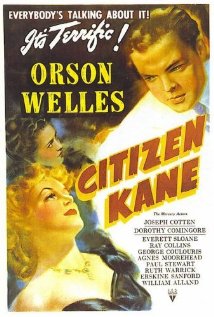
Citizen Kane   1941

Orson Welles

(1 Oscar)

The one and only. Movies would never be the same again. The story goes, that it was Nelson Rockefeller (Just who did you think the ‘R” in RKO was, anyway?), who heard the Mercury Theater of the Air’s now-infamous radio broadcast of War of the Worlds, and called the Studio to suggest bringing this young radio guy, Welles, out to Hollywood for a look. So, Welles’ Mercury Theater of the Air troupe moved out to Los Angeles, and the rest is history.

“Rosebud” – what was it, anyway. From the opening Newsreel, to the screening room scene, to a life revealed, every moment dazzles. Innovations, one after the other – from Greg Toland’s mesmerizing lens, to the rapid fire editing, to Welles’ brilliant direction, to the debut of all those newbie’s from radio – it was all so new and fresh. The screenplay, by Welles and Herman Mankiewicz, has two camps; critic Pauline Kael whose expository essay “Raising Kane”, suggests Manky to be the prime mover, with Welles making additions here and there. Peter Bogdanovich, whose response to Kael was his own essay, “Kane Mutiny”, published in Esquire, refuted Kael’s claims. Years later, it was revealed that Bogdanovich’s piece was actually penned by Welles. Who cares, really? The film’s the thing, and there’s just nothing like it.

http://www.youtube.com/watch?v=zyv19bg0scg


The Wizard of Oz   1939

Victor Fleming

(2 Oscars)


Well, because! Because of the wonderful things he does. I wanted to include a musical, and no other Hollywood Musical matches Dorothy’s magical tornado-assisted journey from Kansas to Oz, and back again. Nothing even comes close. It’s as fresh and appealing to children today, as it was when it first opened seventy years ago. Seventy years – hard to imagine. Garland, and Bolger, and Lahr, and Haley, and Frank Morgan’s Wizard, and Magaret Hamilton’s Wicked Witchiness, and Billie Burke’s Glinda.  And all those Munchkins, who live Somewhere, Over the Rainbow. It’s just all so perfect, and it made the world a better place.


 http://www.traileraddict.com/trailer/the-wizard-of-oz/trailer


Nashville   1975

Robert Altman

(1 Oscar) 

I’ll bet I surprised you with this one. Altman’s scathingly hilarious take on Country Music, and the shrine it lives in. The word got out, Robert Altman was on location shooting some kind of musical, and he was letting the cast members write their own songs. Well, that’s about all it took for actors from Altman’s older films to start showing up on the set. And Altman wrote them in, playing themselves, and they improvised their scenes with other cast members. Julie Christie and Elliot Gould were among them. It was a chaotically joyful atmosphere.

OK, during a political campaign in the city of Nashville, the story drifts lazily through the lives of several of its citizens – some musicians, some wannabe’s, and some just plain folks. The vignettes are so absorbing, and the music so great, that it doesn’t seem to matter that the movie seems to have no central theme – but it does. Incredible performances by an insane Barbara Harris, and far too many actors to name. Just about the time when you begin wondering what this thing is all about (we’re now almost two hours into it with no apparent story in sight), all of the characters converge at the site of a political rally. And then it happens – someone we’ve known all along, unexpectedly pulls out a gun and starts shooting. And cast members start falling. And in the midst of chaos, the craziest member in the cast, Barbara Harris, a wannabe lounge singer with no voice, picks up the microphone and begins to sing, somehow calming the terrified onlookers. Nashville Is an eyeful and an earful, but most of all, it’s joyfully entertaining.


http://www.youtube.com/watch?v=9SeotkeSfp8


Network   1976

Sidney Lumet

(4 Oscars)


“I’m mad as hell, and I ‘m not going to take it any more”. So say’s Howard Beale, former Mandarin of television, and currently the madman of the airwaves. Lumet’s crafty direction, pretty much letting his cast do their thing, comes in second here, to what may be the greatest screenplay ever written. Paddy Chayevsky’s brilliantly prophetic script foresaw the future of television. In painting a picture of a television network gone mad, he basically created Fox News, long before Rupert Murdoch ever wrote the check. A sexy cast, including William Holden, Faye Dunaway, Peter Finch, Robert Duvall, and Ned Beatty in a scene you’ll never forget.  

http://www.youtube.com/watch?v=CeCMSLP3Wy8


The Godfather   1972

Francis Ford Coppola 


(3 Oscars)

The Godfather Part Two

Francis Ford Coppola  

(6 Oscars)

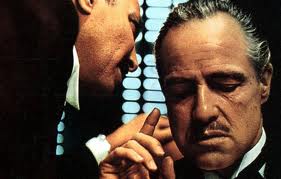
Ok, I know I’m cheating here, but I’m going to combine them as one movie. I didn’t want the Godfather Saga taking up twenty percent of the list. Find forgiveness in your heart. Vito Corleone’s clan seems to take up more than its share of space in the American psyche. Part Two may be an even better movie than its predecessor. From Clemenza’s “Leave the gun, Take the cannoli’s”, to Hyman Roth’s “Michael, we’re bigger than US Steel”, it’s a marvelous narrative of two generations of a Mafia crime family. Really, picture perfect in every way. Coppola’s all-seeing eye seems everywhere, in every detail, no matter how small. He brought the A-Team to this one, from Gordon Willis’ dark images to Nino Rota’s music. Splendid!


http://www.youtube.com/watch?v=bf16Vc3iZjE


http://www.youtube.com/watch?v=DLMg25_-EXk


http://www.youtube.com/watch?v=qJr92K_hKl0


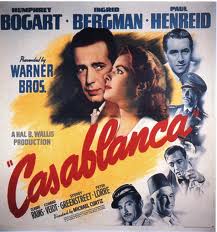
Casablanca   1942

Michael Curtiz


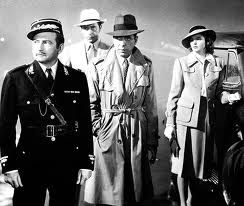
You must remember this. Hollywood’s greatest accident, and maybe the all-time most perfect script. Just a production number on Jack Warner’s long list of propaganda projects for Washington, but somehow, everything fell into place. Bogart and Bergman, who seldom spoke to each other off-camera, and never struck up a friendship, came off as perhaps the most romantic couple in the history of movies. Warner’s stock company filled out the cast perfectly, and that song – As Time Goes By. Assigned to write the screenplay, totally by happenstance, were those happy go lucky Epstein twins, Julius and Philip, who would pen perfection, much to their own surprise. From top to bottom, no one had any idea that this little propaganda vehicle would wind up to be one of Hollywood’s greatest classics.

But there was a problem. The edited film made no sense. Jack Warner hated it, and said it was unfixable. Editor Owen Marks sat there with Director Michael Curtiz trying every trick he could think of. It was the ending. Bogart sends Bergman off with Henreid to the waiting plane. Major Strasser shows up and is shot by Claude Raines, much to Bogey’s surprise. But it doesn’t seem to make any sense. Warner drags the Epstein boys off their tennis court and orders them into the editing room. When they see the ending they’re stunned. “What have you done to our script?”, they ask Curtiz and Marks. Julius Epstein tells Marks to reverse the order of two close-up reaction takes during the end of the scene. Voila, a classic is born. And the Epsteins return to their tennis game. The Fundamental things apply, as time goes by.


http://www.youtube.com/watch?v=INBmVxAsdFE


*

© 2011 Shaun Costello

Keep SHAUN COSTELLO’S BLOG up and running.
Creating and maintaining this BLOG is time
consuming. If you like what you’ve been reading,
please help me keep it going.
DONATE ANY AMOUNT Through PAYPAL at:


MY TEN FAVORITE EUROPEAN FILMS

MY TEN FAVORITE EUROPEAN FILMS

(This morning, anyway)

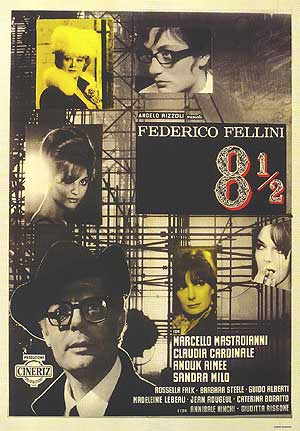
8 and 1/2   1963   

Fellini   

Probably my all-time fave film, period. Responsibility visited, and avoided at all cost. Oh, that Guido.


Grand Illusion   1937

Jean Renoir

When asked to name his ten favorite movies, Orson Welles replied. “Oh, that’s easy, Grand Illusion, and nine others”.


The Bicycle Thief   1948

Vittorio DeSica

DeSica’s poignant look at a father and son in ravaged post-war Rome.


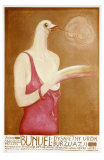
The Discreet Charm of the Bourgeoisie   1972

Luis Bunuel

Bunuel’s love affair with, and hilarious take on the Bourgeoisie – what they do, what they say, how they think – If they do, if they say, if they think. A surreal comedy – the Bunuel way.


Breathless   1960

Jean-Luc Godard


Belmondo and Seberg, on the run. Sometimes silly, often dazzling. Godard’s best, I think. And, the best of the French New Wave.


L’Avventura   1960

Michelangelo Antonioni


Gilligan’s Island for grown-ups.


Beauty and the Beast   1946

Jean Cocteau

Well, you know the story. Cocteau’s masterpiece, and lovely to look at. Say, is that wall moving?


Mr. Hulot’s Holiday   1953

Jacques Tati

The hapless Hulot heads for the seashore. A delightful comedy in mime, with an elastic Tati surviving one catastrophic situation after another. My two fave scenes are The Train Station, and that Taffy that never quite reaches the sand.


Claire’s Knee   1970

Eric Rohmer


At an alpine lake resort, a 35 year old Jerome is struck dumb by teenage Claire. If he could just touch her knee, maybe that would be enough. Sensually photographed by Nestor Almendros, this is Rohmer’s best effort, I think. An intelligent film, meant for an intelligent audience.


Metropolis   1927

Fritz Lang

Lang’s silent sci-fi dazzler. Hard to imagine now, the audience’s reaction in 1927, to these visionary images. Many have not scene this – don’t be one of them. 


*

 © 2011 Shaun Costello

Keep SHAUN COSTELLO’S BLOG up and running.
Creating and maintaining this BLOG is time
consuming. If you like what you’ve been reading,
please help me keep it going.
DONATE ANY AMOUNT Through PAYPAL at:


THE BIG BANG

THE BIG BANG

Mischief Beyond Measure

 By Shaun Costello

During my twelfth August, I found myself without much to do, and, unusual for me, bored stiff. Many of my friends’ families had Summer houses on Long Island, and they were frolicking in the surf while I was roasting in Queens. Back then, houses were not usually air conditioned, so I was not only bored, but sweaty and uncomfortable. From the first of August through Labor Day the Community House closed every year for maintenance and repair. They repainted the inside, sanded and revarnished the gym floor, and spruced the place up for the coming season. No Community House meant no swimming pool, no gym, no organized sports, and no place to hang out.

My best friend Jimmy’s parents had a cabana at a beach club out on Long Island, but they had decided that they didn’t like me, so we didn’t go there very often. Catholics were too Jew-like for them, and under suspicion of suspecting. They only seemed comfortable in the waspy womb of Protestant America, where their pretense at Christendom could be fully realized.

Jimmy’s dad, an Austrian Jew, had emigrated from Vienna before the outbreak of World War Two. In Vienna, back in the early thirties, he had made a name for himself as an up-and-coming photographer. He was a talented young man whose portraits were in demand. He wasn’t rich, but his career seemed promising, and life was good. By 1936 the mood in Vienna was changing. In Neighboring Germany Hitler had been made Chancellor, and Crystal Nacht was just around the corner. Nazi gangs roamed the streets of Vienna, breaking the windows of Jewish shops, and beating up the owners. The Nazis had gotten their fingers into the Austrian government, and Jews began disappearing in the night. As time went on the great fear among Austrian Jewry was their country being annexed by Germany. Should that happen not a Jew in Austria was safe from murder. Jimmy’s dad had lost friends and family to the camps, and was determined to get out of Austria while he still could. He had enough money saved to make the appropriate bribes, and in the Summer of 1938 he found himself safe at last, living in Brooklyn, and with a promising career as, “that talented young European photographer”.

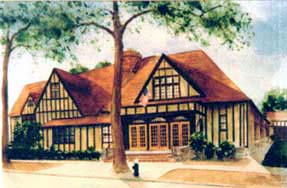
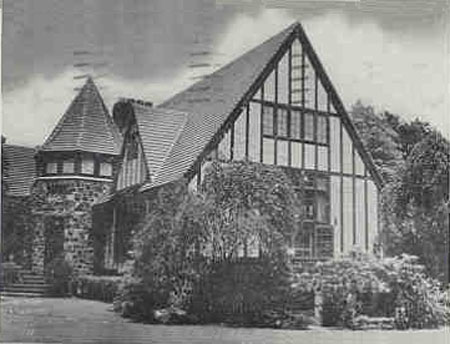
He had added an extra “n” to his name to make it seem more Germanic than Jewish, and filled in “Lutheran” as his religion on the immigration form. His safety, and the safety of the family he planned to have, was more important than his Jewishness. He was determined that the horrors of Nazi Europe would never touch him again. When it came time to marry he chose the most goyishe looking woman he could find, an ivory skinned redhead, who belonged on the cover of a waspy magazine. During the War he managed to secure a position for himself as a middle-man merchant between the Army Signal Corps and the manufacturers of photographic chemicals. He made only a few cents on a gallon traded, but the volume was enormous, and this was how he made his fortune. By the early Fifties he was a rich man. He had become quite famous as a theatrical photographer, with an enormous studio on Times Square. He had a gorgeous wife, and three boys, and it was time to make the move from Brooklyn, but he had one last piece of slight-of-hand left to do in the charade he had created. One last brick to add to the wall so that no one would ever suspect his Jewish past. He would move his family to the most anti-semitic neighborhood he could find, and become a pillar of the community. He would not necessarily become an open Jew-hater, but he certainly wouldn’t let his children marry one. So he bought the big Tudor house on Greenway South, one of the nicest streets in the Forest Hills Gardens, joined the local Congregational Parish, and settled in to life in Fortress Goyim. He was finally safe. His family was finally safe. Safe from anti-Semitism. Safe from danger. Safe from hate. Right here in the nurturing little community that existed under the threat of the race lien, which prevented him from selling his house to a Jew.

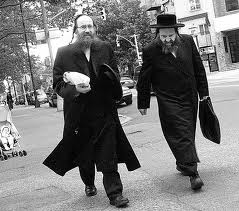
Once, while Jimmy and I  rode in the car with his parents, his Dad saw Orthodox Jews walking along the street and yelled, “Look at them. Animals, with their big black overcoats. Overcoats in the middle of the Summer. They’re Animals. Animals”. His mood would darken, and you knew to stay clear of him for the rest of the day.

One day, Jimmy asked me if I had ever seen his Chemistry lab. Jimmy’s father was rich, and from a technical background, so when it came time to give his son the inevitable Chemistry Set as a right of passage, he build him a laboratory instead. It was a secret room in his basement that I had never seen before, about ten feet by twelve, lined with shelves cluttered with test tubes, and beakers, and scales, and jars that contained mysterious substances, and large metal cylinders that contained even more. This was a promising development. Jimmy had no interest in Chemistry and told me that he hadn’t been in his lab in at least a year, but maybe there was something that we create using all these exotic ingredients. Something like a gigantic stink bomb that we could set off in a movie theater. We were now two boys on a mission, and the month of August suddenly looked promising.

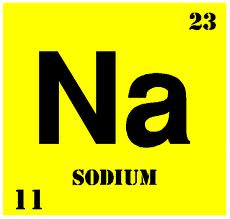
Jimmy did all the looking, since I had no idea what any of this stuff was, and he pulled a large metal cylinder, maybe 24 inches high, out from under the counter and said, “I forgot I had this stuff”. “What is it”, I asked. “Sodium metal” he said, smiling. “What does it do?”, I asked, and Jimmy said the magic words, “It explodes”. “You mean like dynamite?” I asked, grinning ear to ear. “No, it’s different than that. I’ll have to show you”. So we lifted the heavy cylinder on to the marble counter and began to open it. The lid was very tight and took a while to open. Inside, there was a murky liquid, and submerged in the liquid was a gray ball about the size of a medium cantaloupe, that looked like it was made out of putty, or modeling clay. Jimmy lifted it out with large tongs, and scraped off a tiny spec, about the size of a beebee. He dipped a tiny jar into the murky liquid, which he told me was kerosene, and put the tiny spec of sodium metal into the little jar. He told me that sodium metal was an unstable substance that had to be kept submerged in kerosene to keep it out of the atmosphere. If it was exposed to the air for any period of time it would slowly oxidize, and then disintegrate. If it was submerge in water however, it would rapidly oxidize and explode.

We went outside looking for a puddle. Jimmy dropped the little spec into the water, and it began to wiggle, and then fizz, and then spark, and then the little spec exploded. It sounded like the crack of a cap pistol. He told me that this was only the size of a beebee. If it were the size of a ball bearing it would be as powerful as a cherry bomb. A marble sized piece would be as powerful as half a stick of dynamite. A golf ball would be the equivalent of three sticks of dynamite. He went on and on until saying that with a softball sized piece of sodium metal you could probably blow up the whole neighborhood. We would have to be careful with this stuff, but the possibilities were limitless.

We started with tiny pieces, increasing their size incrementally, and taking careful measurements that told us how much the slight increase in masse would increase the volatility of the explosion. After a while we were able to create ratios that enabled us to predict the power of each explosion in proportion to the masse of the sodium particle. Actually Jimmy, who was way better at math, did all the calculations, while all I really did was throw the stuff into the water and watch it blow up. It was like the Manhattan Project, during WWII when scientists endlessly tried to calculate how big a bang they could get out of plutonium. Not having the laboratories at Los Alamos available to us, we did our experiments in the lake in Flushing Meadows, the home of the 1939 World’s Fair.

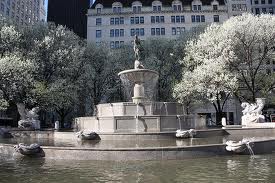
The day came when we felt ready. Our objective was to make as many people as possible soaking wet without actually blowing them up. We put a ball bearing size piece of sodium into a small, kerosene filled container, put the container into a back pack, and got on the E Train for Manhattan. Jimmy remembered that there was a fountain outside the Plaza Hotel where people sat and ate lunch, so that was our destination. It was perfect. If all went well we could soak about fifty people, while innocently watching from across the street. It would take about 45 seconds in the water before this size piece of sodium would explode, giving us ample time to watch from a safe distance.

We watched and waited. KABOOM! It was not what we expected, but we learned an important lesson. The sodium particle floated on the surface so that when it blew up it moved air up and water down, and although the loud explosion terrified the crowd who ran in all directions which, I have to admit was fun to watch, no one got wet enough for the event to be truly satisfying. We wanted to see all the water in the fountain up in the air, and all over our innocent victims.

Back in his lab, Jimmy calculated that the sodium particle had to be submerged, equidistant from the bottom and the surface in order to maximize the movement of the water, so he rigged a kind of cradle out of thread that would contain the sodium and attached a tiny fishing weight to the other end. Since most of the fountains we had seen were about two feet deep he made the length of the thread 12 inches.

The next day we got back on the E Train and headed for Rockefeller Center. There was a good sized fountain surrounding a golden statue above the ice skating rink, and the best part was that it was crowded with people. Jimmy had increased the size of the explosive to where it could really do some damage, and the depth of the water was perfect, so in it went, and sat oxidizing 12 inches under the surface, while the two of us walked over to a Sabrett Hog Dog vender about a hundred feet away and stood in line. It took about a minute before it happened, and when it did, it exceeded our greatest expectations. The water seemed to start moving before we heard the loud explosion, and felt the air blow by us. There was one exquisite nano-second when virtually all the water in the fountain was airborn, soaking everything and everybody within fifty feet of the epicenter. Pandemonium began as soaked tourists ran screaming from the area, convinced that the Ruskies had dropped the big one.

When we thought about it later we realized that we had created the ultimate prank. A lot of water, and a lot of noise, but it couldn’t really hurt anybody. We continued inflicting water torture on the city for another week before we tired of it and needed a new challenge. It was time to see how much physical damage this stuff could do. We took a piece of our precious sodium the size of a golf ball over to Flushing Meadows, without really knowing quite what we were going to do with it. There was a public bathroom by the lake that no one ever seemed to use, so we went in and reconnoitered. There were several enclosed commode, and one urinal, and the place smelled like a hundred years of pissing on the floor, no wonder no one used it.

The plan became dropping the sodium into the toilet, and flushing it down. If it really was the equivalent of three sticks of dynamite then there should be a noticeable rearrangement of the inside of the little building. I kept watch outside, waiting for a moment when no one was in sight, and yelled “All clear” to Jimmy. I heard the toilet flush, and my best friend came tearing out of the building. We ran up the hill, and stood under a tree, and waited. It took a while, and when it finally happened it was different than we expected. There was a light flash that was visible through the doorway, followed by the glass in all the windows being blown quite some distance across the grass. The sound of the explosion was muffled, I guess because it happened down in the pipes, but the intensity in the air pressure change was extreme. There was a residual sound of glass and metal falling, and then nothing. It was over.

The sound was not loud enough to attract much attention, so we slowly made our way down to ground zero. The inside of the building was probably the most amazing site I had ever witnessed. There was nothing left. The urinal was still intact, but the walls of the stall had become crinkled pieces of jagged metal that seemed to be everywhere, and where the toilet had been there was only a hole in the floor. Little pieces of the porcelain toilet covered the room, and a metallic smell hung in the air. We looked at each other and realized that we had gone too far. We had completely destroyed a public facility. Up until now we had only made people wet, but this was different. We had committed a crime. We had vaporized public property. We were desperadoes without portfolio. The authorities would hunt us down like animals. We would be disowned by our families. This was serious. So it was time to put what was left of the Sodium back where we found it, and go into early retirement from the demolition business.

About a week before Labor Day and the reopening of the Community House we found ourselves going through sodium withdrawal. The amount left in that metal cylinder was slightly larger than a baseball, and if the whole piece oxidized at one time we might just recreate the big bang. We agreed on two conditions: no victims, and no damage. What we wanted was one last glorious demonstration of the movement of a massive amount of water, even it was only for a fraction of a second, which was all we could hope for anyway. Jimmy came up with the solution, and our target became the Community House pool. We would explode all the remaining sodium at once in a glorious farewell to our very own Manhattan Project.

It was perfect. The pool was still closed for repair, and there was nothing breakable in the area. The walls were cement, and the floors were tile. Our main concern was the windows, but Jimmy suggested that, if we opened them all, then the force of the blast should leave them intact. The pool was nine feet at the deep end, and we calculated that the sodium should explode twelve inches from the bottom to move the maximum amount of water. Zero hour would 6PM the next evening, a time when most people were home having their dinners.

An hour before the scheduled cataclysm, using my very own keys to the building, I sneaked inside and opened all the windows. We were ready. At the appropriate moment Jimmy tossed the baseball sized piece of sodium metal into the middle of the deep end of the Community House pool. We were unsure just how long it would take for such a large amount to oxidize, so we watched and waited. It seemed to take forever, and when it finally happened, the event seemed to reveal itself in slow motion. First the water began to move, outwardly from the center. Next, the air blew by us with enormous force as the explosion expanded the atmosphere. The water continued its outward movement from the center of the pool, crashing into the walls and flowing upward. Gushing onto the ceiling and, pushed by the force of the explosion, it had nowhere to go but to follow the ceiling to its center, converging with the water that had flowed up the other walls, and forming a fantastic waterfall, from the very center of the ceiling, back down into the middle of the pool. At that one glorious, unforgettable moment, as the water converged, but just before it began to fall, the Community House pool was empty and bone dry. Not only did the explosion empty the pool, but the moving air instantly evaporated any residual moisture on the surface of the bottom. The whole conflagration probably took no more than five seconds, and when it was over it was as though it had never happened.

No one was hurt, no damage was done, the windows were intact, and all of the water, or almost all, was back where it started. The walls and ceiling were still dripping wet, but eventually all that moisture would either evaporate or find its way back into the pool. Mischief beyond measure. We had done the unthinkable, and succeeded. We had witnessed something as yet unseen. Our magnificent triumph was complete. The  sodium was gone forever, and the summer was over. Soon school would start, and our lives would resume, but that one moment, when every drop of water in the Community House Pool was airborne, will stay with me forever.

 *

© 2009 Shaun Costello

Keep SHAUN COSTELLO’S BLOG up and running.
Creating and maintaining this BLOG is time
consuming. If you like what you’ve been reading,
please help me keep it going.
DONATE ANY AMOUNT Through PAYPAL at:

SIC SEMPER TYRANNUS


SIC SEMPER TYRANNUS

Surviving Catholic Education

By Shaun Costello

This story is excerpted from my childhood memoir

THE LAST TIME I SAW JESUS

Surviving God and Elvis in the time of ‘Duck and Cover’


I suppose I could blame all subsequent events, and ill advised decisions I made in my life on the eight years I spent as a victim of the Sisters of the Immaculate Conception, but I don’t. I sensed, even as a child, that they were no more or less than a necessary evil (at least my parents thought they were necessary) placed in my path to overcome by what whatever means was at my disposal. Back then little thought was given by Catholic families regarding their participation in the selection process available to them in choosing a primary school for their children. They just found the nearest Catholic school, packed a lunch, and off we went. Off to the welcoming arms of a sociopathetic cult of psychological misfits who had been cloistered away from the evils of an all too real world that, even on their best days, they seemed powerless to inhabit. During my eight years of ecclesiastical incarceration I never saw anyone who remotely resembled Ingrid Bergman, not to mention Father Crosby.

Early on, I came to the conclusion that the two most important elements in a Catholic education were penmanship, and lining up in silence. Ball point pens were strictly forbidden, because only a true fountain pen could produce the perfect script demanded by the good sisters. As for the silent line up, the merry cacophony of lunchtime playground mischief came to an abrupt halt the moment the dour penguin shook her hand bell. The shuffle of feet was the only sound as the children found their classmates and silently lined up, awaiting the signal to march off to an afternoon’s lesson in history, which probably included the torture and martyrdom of Saint Isaac Jogues at the hands of the evil Huron Indians. They pulled out his fingernails, and he would not renounce his faith. They pulled out his toenails, and he would not renounce his faith. They gouged out his eyes, and he still would not renounce his faith. Finally, an exasperated Big Chief Huron, fed up with Isaac’s saintliness, cut out his heart and ate it, hoping to ingest some of the holy man’s courage. And old Isaac stood there, bound and gagged, without fingernails or toenails, a big hole in his chest where his heart used to be, and Big Chief Huron, picking pieces of Isaac’s aorta from between his teeth, again demanded spiritual surrender. Not this time Tonto. The old man simply shook his head in a bold expression of saintly triumph over the heathen redskin. Tears in her eyes, Sister Immaculata stopped reading and put down the third grade American History text from which she had read this lesson in God’s victory over the great unwashed.

It was at this point that she noticed the behavior of three arch criminals; myself, Jim Freeney, and Joe Arrico, who had obviously paid no attention to this valuable lesson and instead, had been engaged in spitball wars in the back row. With these three felons in tow, Sister Immaculata made haste for the music room, where every afternoon the Fur Elise was played badly for hours. The music room doubled as punishment chamber during school hours, and was the only room in the building where nuns noticeably smiled. The young hooligans were instructed to lean against the wall with the backs of their legs extended, awaiting Sister’s caress. Reaching into the closet, Sister Immaculata took out a pointer. It was 36 inches long, round, and pointed at the tip, resembling almost exactly the canes used to administer corporal punishment in the third world, much to the horror of self righteous Americana. It came down with a loud whack on the back of poor Joe Arrico’s thigh, as he screamed in pain and begged her to stop. She ignored his screaming pleas and promises of good behavior, and the pointer came down again. I’m not sure how many times she hit him, but it was several, and all the time she smiled. Her screaming, pleading victim was nine years old. Jim Freeney was next with the same result. When it came my turn I was half way to the door before she caught on to the fact that I was not going to be this woman’s pointer fodder. Safely through the door I ran down the hall and all the way home.

 Out of breath, I told my mother what had happened, and her reaction was puzzling. She told me that Sister was always right, and that I must have done something to deserve the punishment I had escaped, and that the only course open to me was to go right back to school, lean on that music room wall and take my punishment like the little criminal I undoubtedly was. I refused. This resulted in a tumultuous few days between my family and the school which, after some posturing, was legally bound to take me back, even though I had not behaved up to the standard of the church’s willing martyrs. Isaac, eat your heart out, or someone else will.

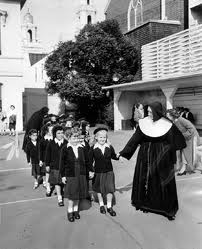
The daily routine at Our Lady Queen of Martyrs school began at 8:30AM, as children began assembling in the school’s playground. At precisely 8:45, each and every morning, Sister’s hand bell would announce the end of playground hi-jinks, and the beginning of the serious business of lining up in silence. The children lined up by class, and began the silent shuffle into the school building, with the little ones entering first, and the eighth graders bringing up the rear.

There was a uniform dress code at the school. Boys wore navy blue trousers, a white long sleeved shirt, and a navy blue tie, usually restrained by a tie clasp. Competition for the coolest tie clasp was intense. Girls wore blue jumpers, a white short sleeved blouse, and navy blue knee socks. The supreme beings at the school, the eighth graders, were distinguished from the rest of the lower flotsam by the addition of blue blazers for the boys, and some kind of pin, probably something like “The Order of the Eternal Virgin” for the girls. Eighth graders were looked up to by the rest of us as perfect examples of children who, through diligence and prayer, walked in lock step with the Holy Trinity. They were also bigger than we were and stole our baseball cards and lunch money, but I guess that’s another issue.

Children at Our Lady Queen of Martyrs were divided into three separate and distinct groups. The first were God’s favorites. These kids all had 98 academic averages, spotless uniforms, heavenly singing voices, inkless fingers, wrote in perfect script, got the best parts in the school play, made speeches at school assemblies, and were generally thought of by the faculty as, “Saints of the Future.” The second group were the kids that God tolerated. They were probably not heaven bound but, through hard work and sacrifice, they might just make it to the next level; even though they had ink stained fingers, couldn’t remember latin lyrics, spent too much time looking out the window, wrote illegibly, occasionally suffered from “ring around the collar”, were easily confused by the rituals of the Catholic Liturgy, and would probably wind up mowing the lawns of the “Saints of the Future.”  Then there was the third group. These were the kids to whom God’s back was turned. The lepers of the Liturgy. They had no shot whatsoever at salvation, and were destined for the big barbeque, to burn in the fires of hell for all eternity. They had dirty finger nails, unkempt hair, ink stains covering their hands and clothes, had close relatives who spoke a foreign languge, ate paste in art class, threw up in hallways, had no reverence for the sainthood, and were to be generally pitied as hopeless creatures, destined for a life outside of God’s plan.

I guess that I was a member of group number two; tolerated by God, a distant possibility for salvation, a perpetrator of the ink stain, a barely average student, and a liturgical numbskull, but if I played my cards right I just might make it to the next level, wherever that was.

As kids filtered into their classrooms, the first stop was the Cloak Room. This was a large closet in the back, the full width of the classroom (about thirty feet) and about six feet deep, lined with shelves, under which were coat hooks, and plenty of space to deposit lunch boxes, galoshes, and whatever else kids brought to school. No one wore cloaks of course, but that’s what the sisters called it, so we did too. The hanging up of hats and coats was followed by a short but robust period of hair pulling, name calling, tripping, strangling, head locking, eye gouging, and general mayhem, after which the little innocents would emerge from the cloak room ready for a morning of inspiration and enlightenment, much to the delight of the good sisters.

The school building, a kind of quasi American gothic structure, had eight classrooms of identical size and layout. The classrooms were large, about 60×30, with three walls covered with blackboards and one with windows. About six rows of desks, ten deep, all faced Sister’s large wooden desk, which was centered in front of the class. A student/teacher ratio of 60 to 1. Tough numbers. The student’s desks had hinged tops, allowing for storage inside, an indentation at the front where pencils and pens could lie undisturbed, and a working inkwell. No one really used the inkwells, other than for pranks, but they had always been there, so there they would stay. Until the day when Petey Cataldo, a kid who didn’t talk much and threw up a lot, pissed in each and every inkwell in our class. Sixty inkwells is a lot of piss, and there were many versions of Petey’s triumph. One had Petey sneaking in after school and actually pissing in all our inkwells. The other, and generally accepted version, had Petey peeing in a container for a week. Then when he felt he had enough for the job at hand, he slipped into school after closing, and filled all the inkwells with the product of his efforts. Anyway, no one ever saw Petey again. The rumor was that he had been sent to some kind of special school for kids who threw up a lot. Another rumor had him incarcerated in an institution for recalcitrant Catholics, but no one really believed that. His image lived on in the folklore of the school as a revered personage, a crusader, the boy who had an answer. Of course none of us knew what the question had been, but that didn’t matter. Petey had guts, and for us that was enough.

Throughout the morning the subjects taught by Sister would change at Sister’s whim. In the middle of a History lesson, Sister would suddenly announce,” We will now take out our Arithmetic textbooks.” And this was sister’s segue to the world of mathematics. As the big institutional clock on the classroom wall neared 12 noon all eyes followed the second hand, until that magical moment that happened each and every school day at exactly noon, when the opening chords of the most famous of all John Philip Sousa Marches would play at a decible level that could have awakened the Saints from their eternal sleep, the classroom doors were thrown open and the lunchtime march of the children would begin. Three hundred little kiddies for Christ would stomp down the stairwells and hallways of the school until they were deposited, music still playing, outside the huge front doors, to the delight and chagrin of the terrified lunch counters of Austin Street.

Austin Street was the main commercial drag in Forest Hills. Supermarkets, clothing stores, Woolworths Five and Dime, the Cameo Bowling Alley, drug stores, florists, Pinsky’s Stationary, a travel agency, Glindermann’s German Delicatessen, Vincent’s Shoe Repair, and various spots where lunch could be had cheaply, if you knew what to order. Most kids brought their own lunch to school in little metal lunch boxes. A peanut butter and jelly sandwich, and a banana, or maybe a few cookies, was pretty typical. The school provided half pint containers of milk, free of charge, to kids who brought their own lunch. If you had some money in your pocket, Austin Street’s menu was varied. The Sutton Hall Pharmacy offered an order of rye toast for 10 cents which could be washed down with a lemon coke, also priced at 10 cents. The newly opened Pizza Prince offered a slice for 20 cents, but kids were still suspicious of pizza. The various lunch counters along the Street offered a variety of cheap filler. An order of french fries was 20 cents, cream cheese on date nut bread could be had for as much as 40 cents, a burger with a hole in the middle from White Tower was a quarter, and various other offerings were priced accordingly.  If you were really flush, and I’m talking over a dollar here, and you were up for some serious adventure, Austin Street offered “Hamburger Express”. A huge success from the day it opened, “Hamburger Express” delivered your Burger DeLux Platter right to your hungry little face on the flatbed rolling stock of Lionel model trains. The walls were covered with train posters and train photographs, and along the inside part of the counter ran the tracks themselves. The tracks that carried the trains that towed the flatbed cars that brought your lunch. The waitresses wore little train engineer caps that said “Hamburger Express” across the brim, and train whistles and bells and authentic trainlike noises of all sorts could be heard throughout the place. If you could afford it “Hamburger Express” was definitely the lunchtime venue of choice.

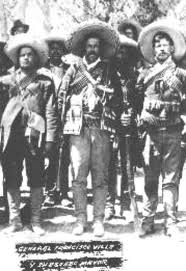
The boys at Our Lady Queen of Martyrs knew about trains. They knew from their earlier days in The Painted Mountains, where they buried their compadres in the Cemetery of unnamed men. They lived without food and water, and became tempered like steel; sinewy leathery boys, whose sole purpose in life was blowing up trains for Pancho Villa, and the glory of the revolution. They knew just how many sticks of dynamite it took to blow a munitions train to hell and gone. And just how many toothpicks it took to cause a derailment that would dump a Cheeseburger DeLuxe into some unsuspecting woman’s lap. These boys knew about trains. And how to stop them.

Finally, “Hamburger Express”, in an effort to keep their trains on the tracks, and to put a stop to the mischief of the boys from the Painted Mountains, hired its own security guard. They dressed him up as a train engineer, and although he greeted customers as they came in, and his demeanor was friendly, even jovial, he was definitely railroad security. This new addition created a more challenging atmosphere. And if that wasn’t enough, possible anti railroad weaponry; ketchup, mustard, toothpicks, pickles, were all removed from the counter until the arrival of your meal, and scooped up the minute they were used. These, and other counter-revolutionary tactics were employed by management in an all-out effort to put a stop to the work of Pancho Villa’s little heros. Additional security didn’t stop Butch and Sundance, and by God it wouldn’t stop Villa’s boys. So, like their days back in the Painted Mountains, they simply brought their own stuff. Toothpicks, gum, silly putty, pencils were all imported from home. And with the advent of watchful railroad security, diversionary tactics were required, usually in the form of a vomiting boy. A kid throwing up in a restaurant was very bad for business, so the boy who was assigned the job of “Diversion Puker” was picked up by the railroad security guy the minute he pretended to throw up on the counter, and carried outside to the sidewalk. With security outside, the bedlam of the entire revolution was free to take place right there inside “Hamburger Express”. Four to five derailments could happen in a matter of seconds, with burgers, milkshakes, banana Splits, and lemon cokes all flying helter-skelter, from their respective flatbeds to the laps of unsuspecting and shrieking customers, as total chaos reigned supreme in the little restaurant. Villa’s vigilantes had struck again.

With the revolution going well, it was time to return to Our Lady Queen of Martyrs for an afternoon of guessing just how many arrows Saint Sebastian was stuck with, and what it all meant anyway. At exactly 3 PM the Sousa march would begin, the classroom doors would be thrown open and the afternoon version of “The March of the Children” would take place. The daily schedule at OLQM was identical except for Wednesdays. On Wednesdays class would end at 2:30 and the entire student body would be marched a short distance to the church, where something mysterious called Benediction took place. This was a wealthy parish and the church looked it. The building was a kind of neo gothic mini-cathedral, with pictures and statues of people with their internal organs revealed, and candles burning everywhere. The shared public Catholic ritual is a theatrical assault on the senses, and Benediction was a perfect example. The church’s altar was fronted by a large proscenium, pretty much like the stage at Radio City Music Hall, where men wearing colorful satin outfits spoke, chanted, and sang in a dead language, and shook ornate little balls filled with incense (usually frankincense or myrrh), as the organ began the prelude to yet another hymn in Latin. I have no more clue today, than I did back then, as to the meaning or significance of Benediction, but I never forgot the music. The main hymn was something called “Tantum Ergo” and, although, at the time,  I have no idea what it meant, it was a catchy tune that seemed to go well with the accompanying visuals and incense. In Latin (the only way I ever heard it) it went like this:

“Tantum ergo Sacramentum Ve-ne-remur cernu-I

Et antiquum documentum Novo cedat ri-tu-I

Praestat fi-des supplementum sensu-um de fectu-I”

(exotically entertaining in a dead language kind of way)

The English translation of this stanza goes like this:

“So great a sacrament, therefore let us worship

Bowed down; And let the ancient example give way

To a new rite; Let faith bestow a support

To the defect of the senses.”

Not much better in English, is it? Anyway that was Benediction, and when it was over we silently filed out of the church and back into the community.

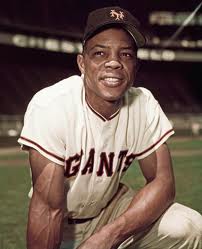
I want to go on record here as having hated Richard O’Leary. I hated him then and I probably still do. In between the end of the afternoon March of the Children and the beginning of whatever came next, there was a certain amount of after school lingering. I was never privy to what girls talked about, but boys talked about gory stuff like beheadings and general human dismemberment, fights they had heard about that were really bloody, movie star suicides they learned about listening to their parents, local gossip like somebody’s mother who was arrested for shoplifting, and when they ran out of the juicy stuff there was always sports. Richard O’Leary was one of these kids who wanted you to think that no matter what you knew, he knew more. He always knew more, and it really didn’t matter about what. I liked sports. I liked to watch sports on TV. I liked to go Yankee games. But I was just not one of these kids who memorized stats. I knew that Whitey Ford was a good pitcher, but I didn’t know his lifetime record against lefty hitting. And, for the record, I have to confess to not caring. But Richard O’Leary knew, or at least pretended he did. Anyway, on this particular afternoon I had been accidentally equipped with a valuable statistic, Willie Mays’ career batting average. I read it in a magazine the day before, and knew that it was 321. Valuable information to have at my disposal,  in between beheadings and shop lifting arrests. So when the opportunity presented itself, and I spoke right up, “Mays has got to be the best pure hitter in baseball, his career batting average is 321.” And without skipping a beat that rotten Richard O’Leary jumped right in. “Not against right handed pitching it’s not. Against righties he only hits 289. The man is a loser.” I had suffered a moment of psychological castration. I went from a kid who knew something to a kid who knew nothing. And not only that, but Willie Mays was now a loser. By the time I was wondering if I had anything in my pocket sharp enough to gouge out O’leary’s eyes he was already correcting some other kid on some other statistic. Another psychological castration. Another disappointed kid. Another triumph for that little weasel. Later that night, in between the light’s going out in my room and falling asleep, I fantasized about a proper vengeance. About an appropriate fate for that little know it all. About justice.

Death Row at Sing Sing Prison is in a separate and cloistered part of the facility. A long dark hallway where only one cell is lit. Outside the cell is the head guard and Father Spinelli, the prison Chaplain. Inside that one lit cell is a kid in striped prison garb, shackled hands and feet, and a terrified look on his face. It’s Richard O’Leary.

The guard speaks as he puts a key in the door, “Its Time son. Get a hold of yourself. Father Spinelli is here to hear your confession.”

“Son, are you sorry for all the sins of your past life and……”

“What confession? I’m not confessing anything. This is someboby’s dream. I’m a kid. You can’t execute kids. You can’t do anything to me.”

“Et ego te absolvo a peccatis tuis in nomine…..”

“Now don’t be like that, son. The Warden is waiting in the chamber to read the death warrant. You’ve got a date with “Old Sparky.”

“Te absolvo a peccatis tuis….”

“I’m a kid, you jerk. You can’t do anything to me.”

“Ordinarily I’d agree with you son, but not after what you said in court.”

“Deus Pater misericordiarum…..”

“What do you mean? What are you talking about? What did I say in court?”

“About Willie Mays.”

“In nomine Patris, et filii………”

“What about Willie Mays?”

The guard, the Priest, and  O’Leary are now slowly walking down the long dark hallway toward the brightly lit execution chamber, where the Warden stands, with a paper in his hand.

“About Willie Mays being a loser. About his average against right handed pitching.”

“ego te absolvo a peccatis….”

“So?….I’m right. He IS a loser.”

“You forgot about the judge son. Big Giants fan. Huge. Big Mays fan. You shouldn’t have said that son.”

“In deus Pater nostrum tuum…….”

“I’m a kid. I can say anything I want.”

“The Warden will ask you if you want your head shaved, son. I’d do it. The last kid, Old Sparky set his hair on fire. That was just before his head melted. What a stink. Two of the witnesses puked.”

“Melted??????”

“In Nomine Patris, et filii, et spiritus sancti……..”

The threesome is now passing the Tombstone Shop on their way to the Execution Chamber, and O’Leary’s eyes are as big as half dollars as he sees the worker carving an epitaph on a Tombstone that reads; “HERE LIES RICHARD O’LEARY WHO KNEW WILLIE MAYS’ BATTING AVERAGE AGAINST RIGHT HANDED PITCHING. LOOK WHERE IT GOT HIM.”

“The melting flesh is bad, but the burning hair……..what a stink.”

“Te absolvo a peccatis….”

“Mommie……I want my Mommie………Mommieeeeeeeeeeeeeeeeeeeeeeeee..”

“You Richard O’Leary, having been found guilty of crimes beyond the pale, are heretofore to be put to death by means of electrocution, on this day……

In excelsis deo ordo paenitintiae…..”

“Mommieeeeeeeeeeeeeeeeeeeeee………….Help Meeeeeeeeeeeeeeee……Mommieee.”

“Get a hold of yourself son……..Ohhhhhh, he pooped his pants, What a stink…….”

“Mommmieeeeeeeeeeeeeeeeeeeeeeeeeeeeeeeeeeeeeeeeeeeeeeeeeeeeeeeeeeeee….”

As the clock strikes midnight the Warden nods to the Executioner, who throws the switch that sends the room into a tumult of buzzes and screams and shrieks and stinking hair, while outside house lights all over Dutchess County dim slightly as the life is fried out of Richard O’Leary’s melting body, leaving his lifeless form hanging, suspended by “Old Sparky’s” leather straps. Dead, and finally silent.

My bedroom ceiling never looked so good. Smiling, I could feel my lips moving before I heard the words. Those appropriate words. Those final words – “Sic semper tyrannus”.


*

© 2008 Shaun Costello

Keep SHAUN COSTELLO’S BLOG up and running.
Creating and maintaining this BLOG is time
consuming. If you like what you’ve been reading,
please help me keep it going.
DONATE ANY AMOUNT Through PAYPAL at:

The Keys To The Kingdom

THE KEYS TO THE KINGDOM

By Shaun Costello

This story is excerpted from my childhood memoir

THE LAST TIME I SAW JESUS

Surviving God and Elvis in the time of ‘Duck and Cover’

My mother’s side of my family had been dancers for two generations at least, and dancers, by the nature of their art, are athletes. In order to do what they do they must have balance, and rhythm, and reflexes, and timing; the very same qualifications as any good athlete. Hang time was as important for Fred Astaire as it was for Michael Jordan. My father, on the other hand, danced with the grace of a cinder block. In the great genetic crap shoot, even though I longed for the life of an athlete; to wear a uniform, to score the winning run, to enjoy the camaraderie and admiration of my team mates, to be accepted as a boy of achievement on my own terms, I sadly wound up with the grace and élan of a cinder block. So when the athletic opportunities at The Community House presented themselves, I pounced. Basketball, baseball, swimming, boxing, lacrosse, field hockey, badminton; I tried them all. My strategy was to find a sport at which I could excel, somehow compensating for my physical shortcomings. I tried sport after sport with disappointing results. I couldn’t hit, I couldn’t throw, I couldn’t rebound, I couldn’t dribble, I couldn’t punch but, but for a reason known only in heaven, God decided to cut me some slack. I could shoot a basketball.

I wasn’t Jerry West, but I wasn’t embarrassing either, so I worked on it. Day after day, week after week, I practiced shooting basketballs. When the three o’clock bell rang at school, I would race over to The Community House, hoping to be the first one in the gym. So one afternoon, out of breath from running the five blocks from school carrying all my schoolbooks, I arrived at the empty Community House. It seemed like I had achieved my goal of being the first to arrive, but something made me stop outside the front door. Whoever opened the building for the afternoon session had left the keys in the door. There were maybe thirty keys on a huge metal ring, probably the keys to every door inside the building. Without a moment’s hesitation, looking both ways to make sure no one saw me do it, I snatched the keys from the front door and slipped them into my pocket. I had no idea what I would do with them, but something told me that having these keys was to my benefit.

The Community House was open from 3 to 5 in the afternoons, and 7 to 9 in the evenings. From 5 to 7, with Mr. Wonderly, who was the manager, and the colored custodian both out having dinner, the building would be empty, and available for solitary exploration. I hung around in the park across the street, and saw Mr. Wonderly and the custodian make their meal-time exits. It was now or never, so I slipped the key into the front door, and entered the empty building. One by one I began opening all the inside doors using my new set of keys: the office, the equipment room which was filled with basketballs, baseball bats, catcher’s masks, badminton racquets, and every imaginable form of sports apparatus, the trophy cabinet, the storage room, the boxing gym, the swimming pool, and finally the locker rooms. I hesitated outside the girl’s locker room, wondering whether this act was a matter for the confessional, and rationalized to myself that I was not a sinner, I was an explorer. So I opened the door. It was pretty much the same as the boy’s locker room. There were lockers, benches, a bathroom, a shower room, and the same combined odors of disinfectant, and chlorine from the pool. Above one row of lockers were six casement windows, each about three feet wide and six feet high, and covered with many layers of paint to insure privacy. I wondered where these windows were relative to the outside of the building, so I slipped out the back door and reconnoitered. There was a kind of drainage or ventilation pit with cement walls about six feet deep along the side of the building and inside this pit were all six windows, painted over and ignored. It occurred to me that an enterprising young man who scraped tiny viewing holes in the paint on the inside of the windows might gain visual access to the entire girl’s locker room from the privacy of this drainage pit. Yikes.

So back inside, I climbed up on the row of lockers and did just that. Using the borrowed keys I scraped small slits, maybe an inch by a quarter inch in each one of the windows. There were now six viewing stations from which a commensurate number of anatomically curious young men could hopefully view the naked bodies of the girl’s swimming team. By the time I got home I was ten feet tall. I had just successfully completed a monumental achievement, and would be known from here on as a boy with guts and vision; a boy with the entrepreneurial foresight to use an opportunity to its greatest advantage. If there were a category of Nobel Prize for felonious mischief, King Gustav himself would be handing me the trophy, and shaking my hand. Maybe I should write him a letter explaining my triumph. My next step would be to select five friends who could keep a secret.

The next day I gathered together a carefully selected group and explained the situation. Jimmy, Chipps Page, Billy Beggs, and the Bullock twins, (Stephen and Stuart) seemed the likeliest candidates so, after discussing strategy, we agreed to meet in the drainage pit at 7pm. There was to be no verbal communication in the pit. Absolute quiet was necessary for success. All discussion was to done by hand signals. At the appointed hour, like little ninjas on a mission, the six of us silently dropped down into the drainage pit, and slowly approached the tiny holes in the paint. And there they were. To our almost uncontrollable joy, the entire girls swimming team was walking around in varying degrees of undress. Diane Montgomery, Betty Welsh, Joan Roberts, Peggy Wainwright, all naked and, since the six of us were hidden in our subterranean vantage point, we could look at them as long as we wanted. And I did this. This remarkable achievement was all mine. I would be a king among boys. I could feel the tension in the great hall in Stockholm, as King Gustav opened the envelope. “And for achievement in felonious mischief, this year’s award goes to……”, the room is hushed. “…..Shaun Costello, the young man from Forest Hills, whose keen interest in anatomy, and willingness to share his discoveries with his peers has changed the outlook of the young men of his community”. I couldn’t wipe the smile off my face. Before going home, the six of us swore an oath of absolute secrecy. If word were to get out, it would be the end of the greatest opportunity any of us had experienced. No one could know what we did tonight. We agreed to meet the next night at the same time, and went home.

A little before seven, the next evening, I noticed Jimmy and Billy Beggs sitting on the Community House Lawn, under a tree. They seemed sad and disoriented, and wouldn’t respond when I asked them what was wrong, so I slipped through the bushes and approached our sacred viewing site. About fifty feet from the pit I noticed a huge cloud of blue/gray smoke, and as I came closer I could hear the giggling and guffawing of a crowd of boys, and to my absolute horror, there in our blessed pit, where the tender nakedness of our female neighbors had been so generously revealed only 24 hours before, were about twenty of the teenage jerks who hung out at the Sutton Hall Pharmacy; Howie Clary, Brian McKenna, Bill Conroy, and some kids I had never seen before. The same morons who beat each other up for amusement, not to mention laying the whup on kids they referred to as kike mother fuckers because they couldn’t think of anything else to do with themselves. And here they were, defiling this hallowed ground, where I had experienced my greatest achievement as a human being; moaning and laughing and smoking Lucky’s and making way too much noise to go undetected for very long. I was shattered. In my short time on earth I had never experienced such disappointment. What about King Gustav? What about my Nobel Prize? What about our oath of secrecy? Somebody had obviously squealed. Chipps Page was always sucking up to the older guys, but I couldn’t accuse him because I had no proof. So I got out of there before the situation turned to disaster and, as I turned the corner onto Greenway North, I could see the flashing red lights from the approaching police cars. Six or seven of the teenage morons were apprehended and returned by the police to the welcoming arms of their angry parents for familial disposition, which I suppose was some small compensation for my loss. But for that one fateful night I was a King among my peers. I had achieved something never thought possible. For the first time in my childhood I had experienced success beyond my wildest dream, followed by crushing disappointment.

*

© 2007 Shaun Costello

                                                                     Help keep SHAUN COSTELLO’S BLOG up and running.
Creating and maintaining this BLOG is time
consuming. If you like what you’ve been reading,
please help me keep it going.
DONATE ANY AMOUNT Through PAYPAL at:


WAKING THE DEAD

 WAKING THE DEAD

By Shaun Costello

This story is excerpted from my childhood memoir

THE LAST TIME I SAW JESUS

Surviving God and Elvis in the time of ‘Duck and Cover’

Promotion to the Fifth Grade at Our Lady Queen of Martyrs School produced no noticeable changes in my day-to-day life, other than having a new teacher, and being a year older. The school, the kids, and the neighborhood seemed to go on as before. I was sitting in a booth at the Sutton Hall Pharmacy, sipping cokes after school with Beth Neilsen, Soomi Esses, Kevin James, and that know-it-all weasel Richard O’Leary. I had no money so Beth generously offered to share her lemon coke with me. Beth was the smartest and prettiest girl in school and, for a reason totally beyond my comprehension, treated me like I was human. At this point in my little life puberty was still only a rumor. Boys and girls rarely socialized, and paid little attention to each other, but Beth was different. She always said hello when our paths crossed, and made small talk that I never attempted to avoid.

 Anyway, probably as punishment for sins of past lifetimes, the four of us sat there listening to O’Leary’s insufferable diatribe on traitors in America. It seemed that President Eisenhower was a card carrying member of the communist party. So was J. Edgar Hoover. O’Leary knew this to be a fact because his father told him, and his father was always right. Not only that, but Douglas Mac Arthur, the hero of the Philippines in WWII, was now living in Moscow teaching the Russians how to destroy America in WWIII, which would begin in the Fall of 1956. “Real Americans”, claimed O’Leary, “knew about this stuff”.

Just before I was ready to kill myself, I looked out the window and saw two kids being chased down the Street by an old man who was swinging his cane at them. They stopped, turned, and shot him with their Weegee water pistols, and the chase resumed. Finally the old man gave up and headed for the front door of the drug store. This was Mr. Nocky, the neighborhood lunatic. No one knew where he came from or where he lived. He was just there, and was often the victim of the cruelty of children. As he passed our booth I spoke up, “Hello Mr. Nocky”. He stopped, scanning the occupants of our booth. “Sasay, sasay, it’s not nice to fool Mr. Nocky’ he replied, as I knew he would. “Just saying hello Mr. Nocky”. “Well, that’s different then. Sasay, sasay, Mr. Nocky went to the Staunton Military Academy, in the beautiful Shenandoah Valley of Virginia. Not everyone went to Staunton, but Mr. Nocky did. And Mr. Nocky always used a Trojan. There are many brands of rubbers, but science has proven Trojan to be the most effective”.  He wandered over to the counter mumbling, “Sasay, sasay” to himself, and by the time he took a stool his daily cup of tea was waiting for him.

Mr. Nocky’s interruption blessedly put the kibosh on O’Leary’s oration and, taking advantage of this event, the group happily disbanded. I lingered outside for a few minutes talking with Kevin James, who invited me to come over to his house the following Saturday, and then made my way home. The next day Kevin James was not in school. There was immediate speculation as to the cause of his absence. Mumps, measles, strep throat, flu, anything was possible. Grim and depressing as always, Vincent Averna was sure it was polio. Suddenly, Mother Superior appeared at the door to our classroom and the kids jumped to their feet chirping in unison, “Good morning Mother Superior”. She addressed the class. “Children, you’ve probably noticed that Mr. James is absent this morning. It is my sad duty to inform you that last night his father was called to God’s bosom”. The whispers began:

“What does that mean?”

“Dead”

“Dead?”

“Dead”

“Who?”

“Kevin’s dad, stupid”

“Kevin’s dad’s dead?”

“Duh”

“What did he die of?”

“How do I know?”

“What’s this bosom thing?”

‘That’s how nuns say people are dead”

“But what’s a bosom?”

“You’re pathetic”

Mother Superior continued, “On Thursday Sister Innocent will lead this entire class over to the funeral home, where Mr. James will lie in repose. You will say a rosary for the salvation of his immortal soul”. And she left.

So on Thursday afternoon, Sister Innocent marched her flock, all washed and dressed for the occasion, the nine or ten blocks to the Fox Funeral Home. The place was owned by the Baxter family whose sons, Noel and Wayne, I had gotten to know   playing basketball at the Community house. We were led into a large room with chairs arranged in rows facing the front where a large wooden casket sat on some kind of platform. The lid was open and, in the distance, you could see the pink, waxy looking face of Kevin’s dead father. Sister Innocent led the class in a rosary, after which we were to stand, in threes, at the side of the coffin, to view the body and pray that the soul of Mr. James would enjoy an eternity of happiness at the right side of God Almighty. Heaven was a very exclusive club. You had to be Catholic, and you had to be good, otherwise you spent eternity in an unpleasant alternative, roasting in the fires of hell. Protestants, Jews, Hindus, Moslems, Buddhists, regardless of their goodness, had no shot at salvation whatsoever, and were destined for the big barbecue. Heaven was a “Catholics only” venue. You had to be Protestant to be President, but you had to Catholic to rate heaven. Papal vengeance, I suppose.

When it was my turn to stand next to the coffin, I was totally spooked. I had never seen a dead guy before, and was both terrified and fascinated. His skin was waxy and translucent and, although I had no experience at viewing the deceased, I can honestly say that he looked very life-like. I wondered what would happen if he suddenly sat up and started talking. Sixty kids would probably pee in their pants. When our respects had been properly paid, Sister marched us all back to school, and we went home from there.

I stopped off at my friend Jimmy’s house to tell him about seeing the dead guy. It turned out that he had never seen one, but knew Wayne Baxter really well, and Wayne had once promised him that he would sneak him into the funeral home after hours and show him dead people. When confronted with his death-tour promise Baxter wanted a buck each for corpse viewing, which I thought was highway robbery, but Jimmy said he would lend me the dollar so we agreed. We rounded up Tommy Welstead and the Bullock twins, who agreed to the price, and the five of us were led by Wayne into the basement door of the funeral home.

The place was closed from five to seven so that the employees could eat dinner, so we were alone with the deceased. After walking us through all the viewing rooms, where waxy bodies were displayed in open coffins, Wayne took us downstairs where he said they did the dirty work. There was a large tiled room where three naked bodies were lying on metal tables. All were elderly, two men and one woman. Their eyes were closed, and their mouths were open, and they had rubber tubes sticking into holes in their skin. There was an overwhelming smell of chemicals, but the bodies themselves had no odor. Wayne told us that they were in the process of being embalmed, and that there wasn’t anything left inside them that could smell. Tommy Welstead started poking one of them with his finger, and Wayne shouted, “Hey, no touching”. Suddenly Stephen Bullock ran for the bathroom to puke his guts out. Wayne, still in tour guide mode, showed us the prep room, where bodies were put when they arrived, but before they were embalmed. The room was refrigerated and locked with a huge latch on the outside of the door, and smelled so badly that it didn’t seem like you could be in there more than thirty seconds without losing your lunch. Wayne told us that the bodies smelled awful before they were embalmed.

Our tour was now over and, out on the street, we parted company with Wayne. The five of us walked in silence for a few minutes before we realized that there were only four. Tommy was missing. Stephen suggested that he probably ran home to puke, and didn’t want any of us to know. It sounded reasonable and, along with Jimmy, I stopped by the Welstead house to tease him about throwing up, but his mother said she hadn’t seen him in a few hours. I suddenly had a terrible feeling that somehow we had left Tommy inside the funeral home. Mrs. Welstead let us use her phone, so Jimmy looked up Baxter in the directory, and got Wayne on the phone. He told him what had happened and Wayne agreed to meet us at the basement door to the funeral home right away. The three of us looked all over the place and there was no sign of Tommy. We wandered around the basement for a while and suddenly Wayne turned white as a sheet and said, “Oh Jesus, did we lock him in the prep room?” We approached the prep room door, the one with the huge latch that could only be opened from the outside. Wayne opened the enormous door, and there was Tommy Welstead, his skin all blue from the cold, and the whole front of his shirt covered with vomit, breathing heavily with his mouth wide open, and his eyes as big as quarters. He ran past us and out the basement door, leaving pukey footprints as he went. We looked inside the prep room, and most of the floor was covered with the last few meals that Tommy had eaten. What a mess. Wayne said we’d better clean this up before his father found it, and Jimmy turned to him and said, “You made five bucks. You clean it up”. So the two of us left our tour guide to clean up the mess. We didn’t talk much on the way home. Dead people. Very creepy.

 *

© 2007 Shaun Costello

Keep SHAUN COSTELLO’S BLOG up and running.
Creating and maintaining this BLOG is time
consuming. If you like what you’ve been reading,
please help me keep it going.
DONATE ANY AMOUNT Through PAYPAL at:


LOOKING FOR THE SHIT

LOOKING FOR THE SHIT

How I parlayed my annoying but tolerable sex addiction into an unexpected career move through the smut biz, providing however, that I could ever find anyone crazy enough to give me a part in one of those movies I had been watching from the safety of my seat in the balcony.

 by Shaun Costello

First things first. In 1968, Otis Redding was sittin’ on the dock of the bay, Marvin Gaye heard it through the grapevine, and The Rolling Stones had sympathy for the devil. America lost first, Martin Luther King, then Bobby Kennedy. Richard Millhouse Nixon won the Whitehouse, and the Tet offensive shocked the Pentagon and turned Vietnam into the quagmire that it was to remain. America’s favorite doctor, Benjamin Spock, was indicted on charges of conspiracy to encourage violation of the draft laws. At the Mexico City Olympic Games, two track athletes had to return their medals for giving the Black Power salute, and Yale went coed.
In 1968 I was 24 years old, living in Manhattan, unemployed, without direction, pretty much adrift. I had gotten a job editing a small, controlled circulation magazine called “Careers for the College Man” when I got out of school, but after two years I became bored with it and quit. With no office destination in my daily schedule, I found myself spending an ever increasing amount of time sitting in the balconies of sleazy movie theaters looking at the bodies of naked women. This was before hard core porno was legally shown in theaters, and the available smut was anything from volley ball games in nudist camps, to exploitation sagas which included some minor nudity, to travelogues showing the breasts of Massai maidens in Kenya. As far as I was concerned any breast was better than no breast, whether it was a bouncing volley baller in a nudist camp, or a maiden in Nairobi. Then came the soft core sex movie, which presented a vast improvement over bouncing boobs. Partial nudity, simulated sex, and occasionally girls actually kissing each other. I was in heaven. I was in the balcony.

I suppose I could blame my sex addiction on my Irish Catholic upbringing, or on every girl who denied me bare tit during adolescence, which was every girl I knew, but the fact is that, for as far back as I can remember, I just wanted to have sex with everyone I met, and was disappointed when reciprocity did not present itself. I’m not even sure what a sexual addiction is exactly, except to say that, for most of my life, my libido got in my way. For most kids puberty is the beginning of an exciting life long adventure, for me it was the end of reason. Sexual fantasy became my religion, masturbation became my delight, and the balcony of the sexploitation house became my home.  I was a willing slave to my own carnality, and that was just fine with me.

Having always suspected myself of possessing larger than life sexual proclivities, not that I understood the alternative, or even wanted to, I had no problem accepting my questionable daily routine, prowling the caverns of Manhattan’s West Forties looking for the shit. My problem was paying for it. With no income to support my ever-expanding sexual adventures, it was only a matter of time before I ran out of box office resources. I needed a job that would pay enough to support my smut habit, while leaving me enough free time to indulge in it.

Thank God for old friends. Joe was the only holdover from my high school days in Forest Hills, and I became reacquainted with him purely by accident, while dropping off the photo-mechanicals for an ad in “Careers” at Grey Advertising, where our production work was done. Joe had taken a job at Grey as a junior Account Exec, and it didn’t take me long to remember how much I liked him. Knowing that I hadn’t saved a nickel from my magazine salary, he had strongly advised me not to quit until I found an alternative income, advice which I completely ignored. So, when I quit the magazine Joe had an idea. He had a friend who was an up and coming fashion photographer. The guy had potential, but was shooting more tests than jobs and needed a good sales rep. A photographer’s rep is someone who pounds the pavement, from one advertising agency to the next, carrying the photographer’s portfolio, hoping to show it to agency art directors, whose responsibility it was to select the appropriate photographer to shoot an ad that the agency had created for a particular client. Sounds simple, but the competition was fierce. For every ad created there were a thousand photographers hoping to shoot it, and a thousand reps hoping to make the deal. I didn’t really know that much about photography, but during my time at the magazine I had accumulated a sizable number of contacts at most at the bigger agencies. It seemed reasonable to me that I could parlay those contacts into a successful career as one of the thousand reps hoping to make the deal.

His name was Peter and his studio was a few blocks from Gramercy Park. A large second floor loft with a decent size reception area filled by several girls with portfolios on their laps, hoping to have Peter shoot test shots of them, a brick walled shooting studio, and an apartment in the back where Peter lived. His portfolio seemed surprisingly good. Black and white photographs, mostly tests, but nice, crisp, appealing stuff. I liked the feel of the place. It was a glamorous space in an entry level kind of way, Credence Clearwater or NRBQ was playing really loud, and there were always models around, hopeful and willing. I could do this. The problem was there would be no salary. I would make a twenty five percent commission on any jobs I brought in, but that might take a while. Peter and I shook hands on a pretty loose arrangement, and I was now a photographer’s rep.

The studio turned out to be a great daily destination. I would arrive each day between nine and ten, drink coffee, make sales calls to art directors at advertising agencies, and canoodle with modeling hopefuls. After lunch I would trek uptown, portfolio under my arm, hoping to make the deal. Advertising was in it’s golden age, and the agencies still had those romantic and almost musical names, now abandoned, and long since replaced by initials: Batton Barton Durstein and Osborn, Sullivan Stauffer Colwell and Bayles, Doyle Dane Bernbach, Benton and Boles, Foote Cone and Belding, J Walter Thomson, McCann Ericson. And I took Peter’s portfolio to each and every one of them, glad-handing as many art directors as I could manage, undaunted by rejection, hoping to make the deal.

By the late sixties the Ted Bates Agency had moved into the new Astor Plaza Tower, at Broadway and Forty Fifth Street, the beginning of the alleged gentrification of Times Square. The Ted Bates Agency became a favorite target for my sales efforts, not because of its size, which was large, or its client list, which was substantial, but because of its location. It was only a block away from my balconies of choice, the sleazy movie houses of Eighth Avenue. An enthusiastic and impassioned sales pitch to a Bates art director on why Peter should photograph their new Schweppes advertising campaign, followed by two hours in the balcony watching exploitation films that probably included the nude initiation ritual of a coven of witches in Denmark.
There was a popular fantasy at the time, that my girlfriend of the moment explained to her shrink three times a week, and me whenever I would let her, which involved living in the cast of “Hair”. Spending the rest of your life dancing the dances, singing the songs, giving, and loving, and caring, and naked, and free. Let the sun shine in. There are worse ideas, I guess, but that just didn’t work for me. For me, being in the cast of “Sexual Customs in Latvia” was more like it. Being naked with flaxen haired maidens, dancing around Maypoles, and participating in strange sexual initiation rituals, while some guy with a camera keeps saying, “That’s right, keep smiling, keep dancing, that’s it. Now….everybody kiss….that’s it…more kissing”.  After all, there were people in these strange movies. Why couldn’t I be one of them?
Before Al Goldstein started publishing Screw, there was an alternative weekly called The East Village Other which, because of its highly sexual content, was a must-read for any self loathing sex addict. The classifieds in the “Other” were particularly amusing, and a good place to find cheap entertainment. Swingers Clubs, Encounter Groups, Rap Sessions, Naked Bhudism – hey, it was 1968 and people DID these things. As I perused the assortment of opportunities something stopped me dead in my tracks. Right there, in between INGRID’S ENCOUNTERS, and RAP LIKE YOU MEAN IT, was the ad I had been looking for all my life. The answer to every question. The remedy to every ailment. Better than finding the Holy Grail. Right there in capital letters, printed for all to see:

MALE AND FEMALE MODELS WANTED, NUDITY REQUIRED.

I gasped. I tingled. There was a phone number to call at the bottom of the ad. My prayers had been answered. Flaxen haired nakedness, and Maypoles, and kissing, and dancing, and more kissing, and more nakedness………Latvia, here I come.

It was early February on 42nd Street, cold and bleak like it’s supposed to be. At the huge news stand on the corner of Broadway all the newspapers carried the same photograph on their front page. It was Eddie Adams’ Pulitzer Prize winning pic of the South Vietnamese general holding a pistol to some poor guy’s head and blowing his brains out. A major offensive had just begun by the North Vietnamese army on a holiday called Tet, and there was pretty universal grumbling about where this whole mess was going. As I stood there in a crowd of equally disturbed gawkers, looking for brain particles coming out of the guy’s head, the speaker over the record store on the corner was blaring out the Beatles’ Happiness Is a Warm Gun. I hesitated, savoring the irony of a not easily forgettable moment, and then began to work my way east toward Sixth Avenue. Happiness Is a Warm Gun. Not for the guy on every front page in the city getting his brains splattered all over downtown Saigon, it wasn’t.

The north side of 42nd Street was mostly two and three story buildings, cheap retail or fast food on the street level with a stairway to the floors above, inhabited by temporary tenants, occupying the space until the long promised demolition began. I took the index card out of my pocket. I knew the address by heart, but somehow having it on a card was like having the written invitation to a party. The studio was on the second floor over a cheap electronics store that occupied the street level. The kind of electronics store that’s been going out of business since the day it opened, with large banners covering most of the windows that read: LAST DAYS…….EVERYTHING MUST GO……..LOST OUR LEASE……….MAKE AN OFFER. I guess somebody must have believed the signs, because there were customers going in and out. There was a doorway to the right of the store, and inside a stairway to the second floor. I started getting nervous as I climbed the stairs. Would there be flaxen haired peasant-girls awaiting my nude caress? Would there be nakedness and kissing? Would they like me? Or would they simply say that there’s been a big mistake. What nude models? What the hell are you talking about? Nude Models? You better get the fuck outta here. Get out. Get out before I call the cops, do you hear me. Get the fuck outta here.

I sheepishly opened the door because no one responded to my knock. It was a big, empty, dirty space, with dark paper covering the picture windows to the street. A heavy-set man came through a door with the sound of a just-flushed toilet behind him. “You the guy?” he asks me. I tell him I called from the ad in the paper, and that somebody gave me the address and told me to come on over, and that I was sorry if I was late. “Don’t worry about it. The girls are in the back. My name’s Aaron”.  The place was owned by a guy named Teddy Snyder, who had a camera store in Queens, and was making extra money selling nude photographs to cheap sexploit magazines. His Igor-like, toilet flushing assistant Aaron led me to the back where Teddy was busy, taking pictures of two seriously ugly biker babes. He was an affable but business-like guy who was there to take nude photographs of myself and the two ugly girls that would be published in masturbatory magazines, and he would pay us $25 dollars each for the session.

So we start. I’m relieved to find that there’s no kissing. Not even any touching. Teddy took photographs of semi-naked people almost, but not quite touching. The girls were both stoned on the same thing, whatever that was, and were ugly. They had gnawed fingernails and horrible feet, and never stopped giggling. None of this mattered to Ted, who probably got paid the same amount for the pictures whether the feet were ugly or not. So I posed with the girls, almost, but not quite kissing their breasts, and they giggled and continued acting stupid. I don’t think they actually ever acknowledged my presence in the room. Where was my flaxen haired maiden, with her kissing and nakedness? I don’t think Teddy Snyder knew any flaxen haired maidens, but what the hell, I had twenty-five bucks more than I came in with, and Ted’s assurance of more of the same.

I walked back over to the corner of Broadway and had a hot dog at Nedicks, covered with their special relish, and a large orange drink, and thought things over.  I was disappointed, but it could have been worse. I got paid something for my efforts, and had gotten a foot in the door. Even though the biker babes had been hideous, the situation itself had possibilities. The flaxen haired maidens were out there somewhere, and if I just persevered, those possibilities would be realized. So I walked over to Eighth Avenue to engage in some serious balcony time.

I’d been Peter’s rep for almost four months now and hadn’t made a nickel, so it was time to muster whatever resources I could to keep the wolves at bay. McCalls Patterns was a division of McCalls Magazine, and published a how-to book for housewives who still made their own clothes, filled with photographs of models showing off the possible final product of their domestic efforts.  The man who ran it was an old friend of my family, someone I’d known since early childhood. So, I made the call. “Hi Uncle Sidney. Say, I was wondering…….who takes the pictures for your pattern book?” The next day I was in his office, in the old New York Central Building, showing Peter’s portfolio to his art director. Thank God for family friends. The art director, who was impressed by Peter’s book, agreed to meet us at the studio for lunch the next day to discuss a possible job. Hallelujah. Well, I’ve done my day’s work, I wondered what was playing at the Tivoli.

Of all the sleaze houses in New York City, the Tivoli Theater was my favorite. Built early in the century as a legitimate theater, it went through the usual transition to Burlesque, then to Vaudeville, then to movie house, and continued the downward spiral until arriving at today’s feature presentation, “THE PLEASURE MACHINES”. Hey, I’m in the mood for some of this. An actual feature film about a crazed scientist who creates life-like female robots whose sole purpose on this planet is giving pleasure to men. And they do it naked! I’d better get myself some popcorn, I’m going to be here for a while. The Tivoli actually had a candy counter, with hot buttered pop corn, Goldberg’s Peanut Chews, Snow Caps, Raisinets, Milk Duds, Honey Roasted Peanuts, pretty much the entire movie theater menu. So, popcorn in hand, I climbed the stairs, took a seat, and got ready for an afternoon of serious depravity. Forget about flaxen haired Maidens. Give me a room filled with horny female robots any day. I began to wonder what they’d be like, inside. Being experienced at public masturbation, I came equipped for the task at hand. You needed tissues or napkins, because this could be a messy business. And you needed something to put the used tissues or napkins in, because it just wasn’t kosher to leave your semen filled paper goods for the ushers to clean up. After all, they have enough to do as it is. Ah, life in the balcony.
My girlfriend of the moment decided to spike the eroticism in our relationship by dragging me over to Cinema One, on Third Avenue, to see a new sensation in modern yet classic erotica. Elvira Madigan was a slow and fuzzy journey with two suicidal Swedish adolescents though forests and foggy bogs, touching and caressing and being profound, all the while worrying about the consequences of touching and caressing and being profound. As the Mozart 21 played on and on, the audience sensed that the moment they had anticipated was near. Yes, here it was, right there up on the big screen, to see, and to cherish.  The waking Swedish adolescent girl glanced up and saw the sleeping Swedish adolescent boy’s flaccid penis, and smiled, as the audience exhaled a universal sigh of approval and acceptance. And I’m thinking, a robot girl wouldn’t do that. No self-respecting robot girl would behave like that. If a waking robot girl glanced up and had one look at that sleeping Swedish adolescent’s equipment she would chow-down on that boy’s weenie right then and there. That’s just the way robot’s are. As the moviegoers exited the theater in silence and a shared understanding of a better world, my girlfriend of the moment gazed at me knowing that we had traveled together through an emotional portal to a new level of mutually experienced and sanguine tranquility. Ouch.

I was splitting time now between my girlfriend of the moment’s apartment in the East Seventies, and an apartment I shared with a friend down in Chelsea, which was not far from Peter’s studio, and definitely the domicile of choice. After work, I picked up a copy of the “Other” on my way to the Chelsea apartment, as well as two slices of pizza. There was a note on the fridge telling me that my room mate wouldn’t be home until later on, and would I please feed the cats, after which I sat down to troll the “Other’s” classifieds, looking for amusement. And there it was again, the same ad:

MALE AND FEMALE MODELS WANTED, NUDITY REQUIRED.

       Teddy had told me that he would use me again, but I guess I must not have made much of an impression. Instead of simply picking up the phone and calling me, he was spending money advertising for someone else. Oh well. Maybe I should have pretended to like the biker babes. Maybe he thought I was ungrateful. I had mentioned to Teddy and Aaron my disappointment at the quality of the female participation. I should have kept my mouth shut. But wait a minute. There’s a different phone number. Maybe this ad was submitted by someone else. Teddy Snyder can’t be the only guy in the world looking for nude models. Maybe this guy knows some flaxen haired maidens. I paced the floor for a few hours, too nervous to make the call. Maybe Ted’s just gotten a different number. What would I say if he answered the phone? So I finally made the call, and got a busy signal. I guess I’m not the only pervert trying to get paid to get naked with women. When I finally got through, a guy named Bob Wolfe answered. After a brief and surprisingly friendly conversation, he told me to show up at 11AM on Thursday, at a ground floor studio on West Fourteenth Street, between Ninth and Tenth Avenues. This time it’s not stills. He’s shooting a soft core, ten minute short or loop, with one guy and one girl in the cast. Now, this is what I’ve had in mind from day one.

I arrived a little early, trying to score points with my potential employer. It was the kind of ground floor space where you entered though a gate under the stone stairway to the first floor of the building, pretty typical in Manhattan walk-ups. Bob was a small, bearded man, maybe in his mid thirties, friendly and talkative. The space was small, with film lights on stands surrounding a mattress on the floor, and a 16MM Bolex camera on a tripod, waiting for action – Bare-bones porno at its best. He tells me that he’s never met the girl, and that this will be her first time. Of course I’m hoping for a flaxen haired maiden, but I’ll settle for what walks through the door. I’ve learned my lesson. No more complaining about the talent.

The bell rang, and Bob disappeared down the hallway to the front door. A few moments later he returned with a truly adorable girl. I couldn’t stop grinning, and probably acted like a complete jerk, but I was beside myself with joy. She had long, curly, sandy colored hair, and a beautiful smile, and a small tight body to die for, and she was grinning at me just as much as I was grinning at her, and this was the moment I’d been waiting for, since masturbation hit me like an explosion when I was eleven. I’d reached the promised-land. Honey, I’m home.

Bob had a very different approach than Teddy Snyder. Paramount with Teddy was there be no touching, where with Bob, touching was what it was all about. Bob’s definition of “soft core” was not showing penetration. Genitalia was to be avoided, but if a penis did sneak its way into a shot, it had better be soft. The camera had 400 feet of 16MM film to expose, which translated into ten minutes. The editing had to be done in the camera, and Bob seemed to have a grasp of the content he wanted and the method to get it. I stood there with my co-star like camera fodder, awaiting our first big shot, while Bob fidgeted around the room turning on lights, checking his light meter, adjusting the camera; all the while expounding on his varied philosophies regarding eroticism and the moving image. And all I could think of was getting this girl’s clothes off. Meanwhile my curly haired cutie had begun her mischief. Her fingers had found mine. She was playfully gliding her hand up and down the inside of my thigh, grinning up at me, like we shared a secret, unknown to the rest of the universe. Well, we did share a secret, at least from Bob. My cock was as hard as a rock.

Bob was big on undressing for the camera. Unbuttoning, unzipping, slowly revealing body parts; reveal and caress, reveal and caress. When you see some skin where fabric had been only a moment ago, kiss it. I guess Bob figured that he could use up four of his ten minutes just undressing, as long as it was done with a certain slow, and erotic panache. I had completed the undressing of my co-star with painstaking tenderness, revealing the whole of her magnificent body, one part at a time, adoring every square millimeter as her loveliness was revealed to the camera, and meaning every bit of it, as she continued to grin at me, and unbeknownst to Bob, to secretly tickle my ever harder penis. OK, my turn. She removed my shirt with a reciprocity of caresses and licking, and the big moment finally arrived. Kneeling before me she undid my belt with her teeth, which I thought was a nice touch, then the hook, then the long slow unzip. She grasped my pants with a hand on either side of the open zipper and slowly pulled them down. Bob had grown silent as his performers had pretty much taken over the action, and the only sound in the room was the constant whirring of the camera. Her hands continued pulling down my pants until that inevitable moment when my very hard, and long imprisoned member, yearning to breath free, was released from the constriction of my trousers, and snapped up like a whiffle ball bat smacking her across the face. The camera stopped, and I heard Bob’s voice, “Oh shit”.

“Look fella, I can’t work this way”, like I’d broken some important rule, which I guess I had. Like a ritual that was familiar to him, Bob slowly turned off each of the four film lights surrounding the mattress. There was no instruction, no explanation, but it seemed understood that in turning off the lights, Bob was calling time out. My erection was obviously here to stay, and the only way around this problem was a sex break. His co-stars would fuck. There would be consummation and completion. The erection would be history, and he could turn the lights back on. So we do.

This little girl was a sexual powerhouse, and the action was noisy and athletic, and wet, and intense, with frequent changes of position, and her mouth was attached to my ear repeating over and over, “come inside me……come inside me…..give it to me”, until staring into her ever grinning face I did exactly that. As the breathing diminished, and the click of the first light being turned back on broke the silence, I realized that I had discovered something about myself that I never knew. In the midst of my bout of sexual frenzy with this wonderful young girl I had felt Bob’s eyes watching me. Quietly, silently, Bob sat there in the dark, watching his performers perform, but only for him. I’m not sure how it made him feel, but it made me feel powerful. Controlling, manipulating, teasing someone’s libido by performing a sex act in front of them. I would have to spend some time thinking about this. I liked the way it felt.

Round Two. My grinning co-star was back at it, playfully caressing my still hard penis while Bob checked his light meter. Action. The second reveal, with the same result, only this time she ducked as my erection escaped my pants, and the camera stopped again. “You’ve got to be shitting me”. Bob’s pissed. He’s been patient with me, even gave me a sex break, and this is the thanks he gets. He’s genuinely angry with me, but there’s no way around it. A second sex break is the only way. Knowing that I’m causing Bob a fair amount of grief, I feign a humble and contrite demeanor, but the truth is that I was having the time of my life. We fuck again. Bob watches. I like the way it makes me feel.

Round Three. Same result. I’m still hard. Bob’s beside himself. Being the pragmatist that he is, Bob sees that the only solution to dealing with my still hard penis is hiding it inside the girl. Now why didn’t I think of that? So we finish the little film with me pretending to fuck my co-star, while in fact doing exactly that. At some point I wondered how this was going to look from my seat in the balcony.

We say our goodbyes, exchange phone numbers, and my still grinning co-star, a bit disheveled from a day at the sexual olympics, exits Bob’s little studio to resume her life in the real world, wherever that is. Bob’s attitude has now taken a new turn. I’ve given him some grief, but I’ve shown him something he’s never seen before, a guy whose erection never goes away. It’s nothing new to me, but Bob’s never seen anything like it. We sat in his studio talking about things. He wanted to know if it was always like this. I told him, ever since puberty. I told him how I used to jerk off before going to the Friday night dances at the Community House in Forest Hills, where I grew up, so that my cock wouldn’t get hard slow dancing with girls. It never worked, but I did it anyway. I was thirteen, and I jerked off a lot. Bob’s looking at me as both, freak of nature and super hero, and I’m still thinking about my ever-grinning co-star. So, Bob laid his cards on the table. How would I like to come over to his apartment later on and fuck his wife while he watches? This was an unexpected development, and I said, “Sure”.  A surprising fringe benefit to a day that had already exceeded any expectations I might have had. Sex had occupied my every thought since I was twelve, and endlessly masturbated in my room, while thinking about the skin behind Betsy Ryan’s knees. And now I was fucking a pornographer’s wife, after a day at the sexual olympics. It was an evening’s gratuity for an outstanding afternoon’s performance, and I was a kid in a candy store.

I could tell you more, but I think I’ve said enough. Besides, I’d run the risk of repetition, and by now you’ve surely Googled me, and have a good idea where all this is headed. As I began the process of remembering, I found this story’s narrator to have maintained a strangely appealing innocence, considering his chosen journey. He took a magic carpet ride, like a modern day Candide, through a murky world of pleasure, and danger, and risk, savoring every moment. And the farther his journey took him, the more distant the innocence became. And, there really was an innocence to the events of that afternoon in Bob Wolfe’s basement studio. It was never really quite like that, ever again.


*


© 2011 Shaun Costello

shaun.costello@gmail.com

This story is gleaned from the pages of Chapter One, of Shaun Costello’s manuscript:

 RISKY BEHAVIOR

Sex, Gangsters, and Deception in the Time of ‘Groovy’


And can be reprinted with permission.

Keep SHAUN COSTELLO’S BLOG up and running.
Creating and maintaining this BLOG is time
consuming. If you like what you’ve been reading,
please help me keep it going.
DONATE ANY AMOUNT Through PAYPAL at:

The Ten Funniest Films I Can Think Of At This Moment


THE PRODUCERS

Well, of course.

http://www.reelzchannel.com/movie/171868/the-producers/


YOUNG FRANKENSTEIN


Mel Brooks rates a second. Pound for pound, more tasteless laughs per minute than any film ever made.

 http://www.youtube.com/watch?v=mOPTriLG5cU

THE LOVED ONE

Tony Richardson – 1965

  The tag line was, “Something to offend everyone”. Scathingly tasteless, and recklessly hilarious screenplay by Terry Southern and Christopher Isherwood. And yes, Liberace is priceless – So is Rod Steiger as Mr. Joyboy, who’s saving up for Mom’s big tub.

http://www.youtube.com/watch?v=62FuWtAvNpo


MY FAVORITE YEAR

Dick Benjamin – 1982

A Personal favorite. You had to be there, and you had to know that Errol Flynn really did appear on the Sid Caesar show a year before his death, which is what the story is loosely based on. And you had to have a special appreciation for Sid Caesar, who played the saxophone at my parent’s wedding.

http://www.tcm.com/mediaroom/index.jsp?cid=32119


THE WRONG BOX

Bryan Forbes – 1966

Hey, it made me laugh a lot. I’ll bet most of you have never even heard of this. Find it – it’s out there. You’ll thank me. Or, maybe not.

http://www.youtube.com/watch?v=PsLmhwZu6LQ


THE LADY KILLERS

Alexander MacKendrick – 1955

So many brilliant, zany comedies from Britain’s Ealing Studios in the Forties and Fifties, and this is the best of the lot.


http://www.youtube.com/watch?v=EoPaqgKWWv0 

OH BROTHER WHERE ART THOU

The Coen boys – 2000

The Odyssey, a comedy? Yeah! Did the Sirens really turn John Turturro into a toad? Does it matter? It’s a smoldering gag that builds over maybe eight minutes, until you wet your pants. Funny, funny stuff.

http://www.youtube.com/watch?v=I1C2gCXo4Gs


SULLIVAN’S TRAVELS

Preston Sturges – 1941

You can’t do a list like this without including Sturges’ take on things funny, and this is his funniest.

http://www.youtube.com/watch?v=YGQem7F_FAg


IT’S A MAD, MAD, MAD, MAD, WORLD

Stanley Kramer – 1963

I know, it’s corny, and looking a bit dated and long in the tooth these days, and I don’t think much of Stanley Kramer, but look who’s in it – everybody! More comedic talent crammed into one mad chase farce than, well – anything else.

 http://www.youtube.com/watch?v=VH4nVMJEopU


AIRPLANE


Jim Abrahams, and those Zucker boys – 1980

Last but not least. Well, something had to be tenth, and why not Airplane. I thought about Caddyshack, but no, it’s Airplane.  Look who’s flying the thing. And it’s even got Harriet Nelson. You can simply listen from another room, and it’s still funny. You can’t not laugh at this. It’s irresistible.

http://www.youtube.com/watch?v=qaXvFT_UyI8

Keep SHAUN COSTELLO’S BLOG up and running.
Creating and maintaining this BLOG is time
consuming. If you like what you’ve been reading,
please help me keep it going.
DONATE ANY AMOUNT Through PAYPAL at:


Design a site like this with WordPress.com
Get started